Category: The Reads

Book summaries

The Present

THE PRESENT

The Gift That Makes You Happier and More Successful

SPENCER JOHNSON, M.D.

BOOK SUMMARY  •  BY READSWITHB.COM

Some books age. This one waits. I first read The Present fifteen years ago and again today, and it lost none of its quiet force. It is not a book about time management or productivity hacks. It is a small parable about where we actually live — and how rarely we live there. The whole of it can be held in one sentence: the most valuable gift you can give yourself is your full attention to right now.

The Story: The Old Man and the Young Man

A wise old man tells a young boy about something called “The Present” — the most valuable gift of all, because the one who receives it enjoys life more and does whatever they do better, each day. The boy is delighted and assumes it is something to be unwrapped on a birthday.

As the boy grows, he keeps guessing wrong. Is it a magic wand for wishes? No. A time machine to somewhere exotic? No — when you receive The Present, you no longer spend your time dreaming of being somewhere else. Is it riches? In a way, the old man says, but its true value is not measured in gold. The teenager grows impatient and demands to simply be told what it is. The old man cannot:

The Present is a gift you give to yourself.
Only you have the power to discover what it is.

The young man searches everywhere — books, the internet, far-off travels — and finds nothing. He takes a job, drifts, is passed over for a promotion, loses a relationship, and grows bitter. His mind is always elsewhere: replaying the past, worrying about the future, distracted at meals and in meetings. Defeated, he returns to the old man, who sends him to a friend’s mountain cabin to stop trying so hard and let the answer come.

Alone by the fire, he notices for the first time a beautiful stone fireplace that had been in front of him all along. He sees that the mason who built it must have been completely focused on the work before him — not lost in a past love or tomorrow’s dinner. In that instant, watching the fire, thinking of nothing but where he is, it hits him:

The Present is not the Past and it is not the Future.
The Present is the present moment.
The Present is right now!

The rest of the parable follows the young man back into ordinary life — work, deadlines, a difficult colleague, a new love, promotions, setbacks — as he slowly learns that being present is only one of three things. When the old man eventually dies, the young man, swinging on the porch of the empty house, discovers the thread that ties it all together: Purpose. He grows into the old man’s likeness, and in the final scene a little girl asks what makes him so happy. He smiles, and tells her about The Present.

The Questions That Stayed With Me

The answers I drew out of the parable, one section at a time.

1. What is being in “The Present”?

Being in The Present has two meanings that fold into one. It means focusing on what is, right now — and it means focusing on what is right, now. With your mind fully on the task in front of you, your attention stops leaking into regret and worry. That focus is itself the source of both the enjoyment and the effectiveness. Being present is not pretending things are fine; it is tuning out distraction and giving your attention to what is important, now.

2. How do I stay in the Present when things around me are not good?

This was the question I most wanted answered — because it is easy to be present in a mountain cabin, and hard amid a layoff, a daily grind, or the loss of someone you love. The young man asks it too, almost word for word, and the old man does not offer a slogan. He offers a reframe: most situations are a mix of good and bad, and what you choose to dwell on decides both how it feels and how well you cope.

Even in the most difficult situations, when you focus on what is right
in the present moment, it makes you happier today —
and gives you the energy and confidence to deal with what is wrong.
THE SITUATION a mix of good and bad Focus on what is WRONG ↓ energy drains ↓ confidence falls you sink, and stay stuck Focus on what is RIGHT ↑ happier, even today ↑ energy + confidence strength to face the wrong

On grief in particular — the loss of a loved one — he does not pretend it away. His definition is one I keep returning to: “Pain is the difference between what is, and what you want it to be.” Pain in the present, like everything else, comes and goes. You stay with it, feel it fully, let it drain you — and only then begin, gently, to look for what is still right, and build on that. For daily struggles and layoffs the move is the same: tune out the unimportant noise, name the one thing that is genuinely good right now (you still have your health, this skill, this morning), and let that small foothold give you the footing to deal with the rest.

3. The connection between the Past, the Present and the Future

This is the structural heart of the book, and the image the old man uses is perfect: think of your work and life as a camera resting on a tripod with three legs — Be in the Present, Learn from the Past, Help Create the Future. Remove any one leg and the whole thing topples.

A BALANCED WORK & LIFE BE IN THE PRESENT LEARN FROM THE PAST HELP CREATE THE FUTURE Remove one leg and it topples — and PURPOSE runs through all three.

They are not in competition; each has its moment. You do not live in the past (that is rumination) or live in the future (that is anxiety) — but you visit each deliberately, for a reason:

When you want to be happier and more effective — be in the Present.
When you want the Present to be better than the Past — learn from the Past.
When you want the Future to be better than the Present — help create the Future.

To learn from the past, the old man offers three honest questions: What happened? What did I learn from it? What can I do differently now? To create the future, three more: What would a wonderful future look like? What is my plan to make it happen? What am I doing today to help it happen? Notice that both the past and the future are entered only so they can improve the present. The present is always the destination.

4. Why positive thinking is essential and negative thinking is costly

The book’s case for positivity is not cheerful denial — it is mechanical. What you give your attention to today literally shapes what you can do today, and what you do today helps build tomorrow.

You create your own Present by what you give your attention to today.
THE DOWNWARD LOOP dwell on what is wrong ↓ energy worse results THE UPWARD LOOP focus on what is right ↑ energy better results Positivity is the only direction that compounds in your favour.

Dwelling on what is wrong drains energy and confidence, which makes you less effective, which produces worse outcomes — a closing loop. Looking for what is right (“even if it is hard to find,” the old man insists) restores energy and confidence, which makes you more effective. The same logic runs into the future: negative beliefs and actions today create worse results tomorrow; positive ones help create a better tomorrow. The old man even gently catches the young man on it — when asked about people having a hard time, the young man asks about the strugglers first, and is told: “examine why you tend to start with what is wrong.”

5. What is Purpose? — the question many ask but struggle to answer

For most of my life “What is my purpose?” felt like an enormous, distant question — something you were supposed to discover once, somewhere on a mountaintop. This book quietly dissolved that. The way it finally clicked for me is this: whatever you are giving your whole, undivided attention to in this moment is your purpose, right then. Purpose is not always a grand mission. It is the act of being fully here, for this thing, now.

Give your WHOLE attention to what you are doing right now = your purpose, in this moment A life’s purpose is simply this, repeated — the thread of what you choose to attend to, day after day.

The book teaches this through attention. The old man asks the young man how present he had really been with the person he loved — whether she was important enough for his wholehearted attention when they were together. That landed for me with my own family. When I sit with my son and give the conversation my full attention — phone down, nothing else tugging at me — that conversation is my purpose for those minutes. Nothing larger is required. When my mind is half on tomorrow’s email, I have quietly left both the moment and its purpose behind.

And here is the lovely part: the big, lifelong sense of purpose is just this same act repeated. The old man’s “reason for getting up in the morning” was to help others — but that grand purpose was nothing more than the consistent thread of what he chose to give his attention to, day after day, moment after moment. So the scary question shrinks to a daily, answerable one: What deserves my whole attention right now? Answer that well enough, often enough, and a life’s purpose takes care of itself.

6. What does success mean to the individual?

The book refuses to define success for you — and that refusal is the point. The old man says success simply means “getting more of what you need, whatever you think is important,” and that we each decide what that is — and change our minds as life moves on. For a teenager it might be better grades or a first job; later, peace of mind; for the old man, “laughing more often, loving more deeply, and being of greater service.”

Being more successful means becoming more of who you are capable of being.
Each of us defines for ourselves what it means to be more successful.

Success here is internal and self-defined: a more peaceful life, doing a better job, time with family, a promotion, better health, or simply being someone who helps others. The measure is not how you compare to others, but whether you are growing into your own fullest version. Notably, the young man finds the promotions arrive only after he stops chasing them and starts doing present, deserving work — success follows the practice, not the other way around.

7. How being Present balances work and life

The young man’s collapse mid-story is one most of us recognise: promoted into more responsibility, he turns from task to task, spends too long on what is unimportant, and watches the important work go unattended until projects spin out of control. Sheer presence was not enough — he had no plan.

Balance, in this book, is not splitting hours evenly between office and home. It is applying the same three practices across both. He begins each morning by imagining what he wants to see happen and planning the day while staying flexible for surprises; he sets weekly and monthly goals; he reviews before meetings; he builds in extra time so he stops living at the last moment. He uses the very same approach in his personal life — eventually imagining and planning a future together with his partner. The tripod holds up work and life equally: present enough to see what matters now, learning enough not to repeat mistakes, planning enough that the future stops feeling like a threat.

The Card on the Desk — A Summary to Keep

The framed summary the man keeps before him, daily.

BE IN THE PRESENT — when you want to be happier and more effective.
Focus on what is right, now. Respond to what is important today.
LEARN FROM THE PAST — when you want the Present better than the Past.
Look at what happened. Learn something valuable. Do things differently today.
HELP CREATE THE FUTURE — when you want the Future better than the Present.
Imagine a wonderful future. Make a realistic plan. Do something today to help it happen.
REALIZE YOUR PURPOSE —
explore ways to make your work and life more meaningful.

What moves me most, reading it again after fifteen years, is the closing reassurance — the thing the man imagines the old man would say when he doubts whether he knows enough to go on alone:

He knew enough. He had enough. He was enough. Today.

That is the gift, and it is always available. Some people receive it young, some in middle age, some when they are very old, and some never do. But it is never out of reach. You can return to the present moment — and give yourself The Present — the moment you choose to.

readswithb.com  •  The Reads
The Power of your Subconscious Mind by Dr. Joseph Murphy

Core Theme: Your mind is a “treasure house.” By changing your habitual thinking and mental imagery, you can literally rewire your destiny.

🌟 The Big Idea

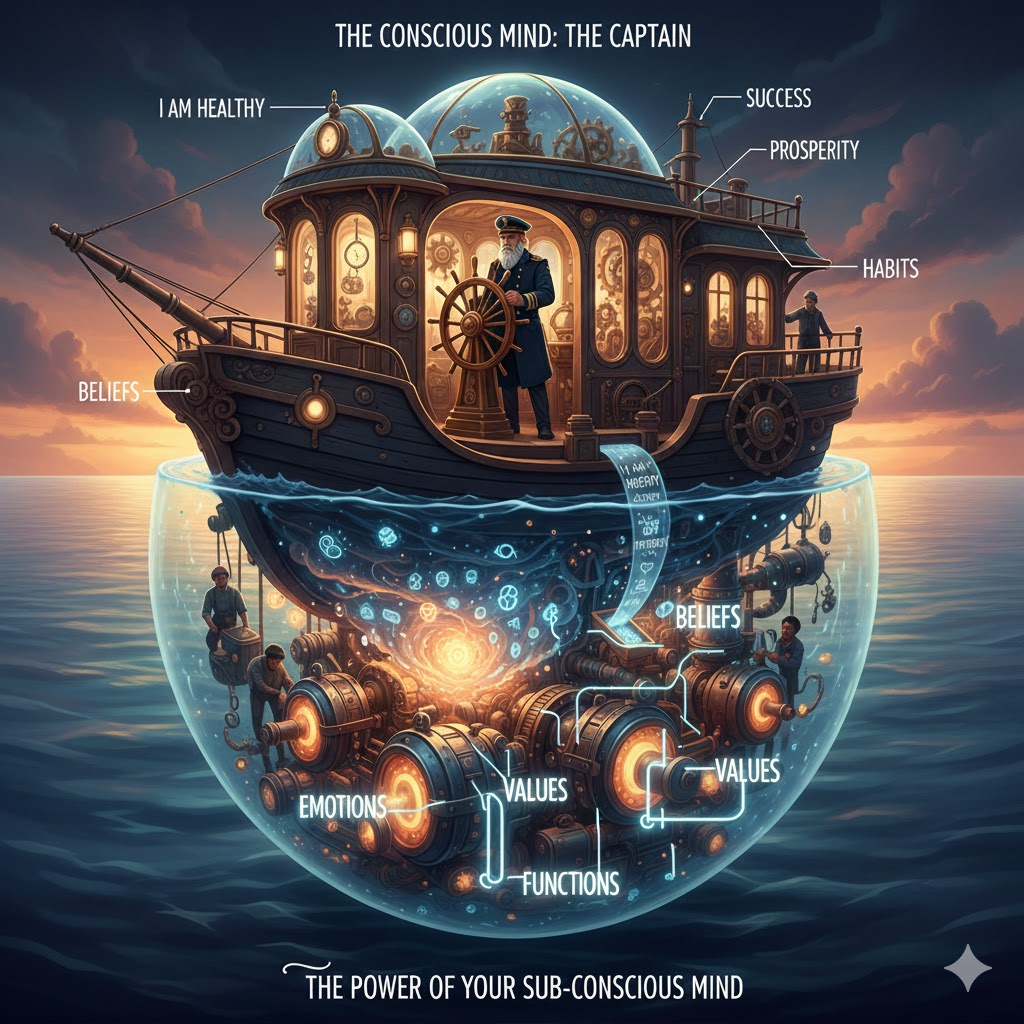
Joseph Murphy posits that we have one mind with two distinct functional parts: the Conscious (Objective) and the Subconscious (Subjective).

  • The Conscious Mind is the captain of the ship; it reasons and chooses.
  • The Subconscious Mind is the engine room; it doesn’t argue, it simply obeys the orders (thoughts) sent by the conscious mind.

Chapter 1: The Treasure House Within You

Murphy argues that most people are “magnetized”—they believe they are born to succeed. Others are “demagnetized”—filled with fear and doubt.

  • Key Concept: The Master Secret is the discovery of the subconscious mind.
  • Takeaway: Stop looking for “luck” or external help. The power to heal your body and solve your finances is already inside you.

Chapter 2: How Your Own Mind Works

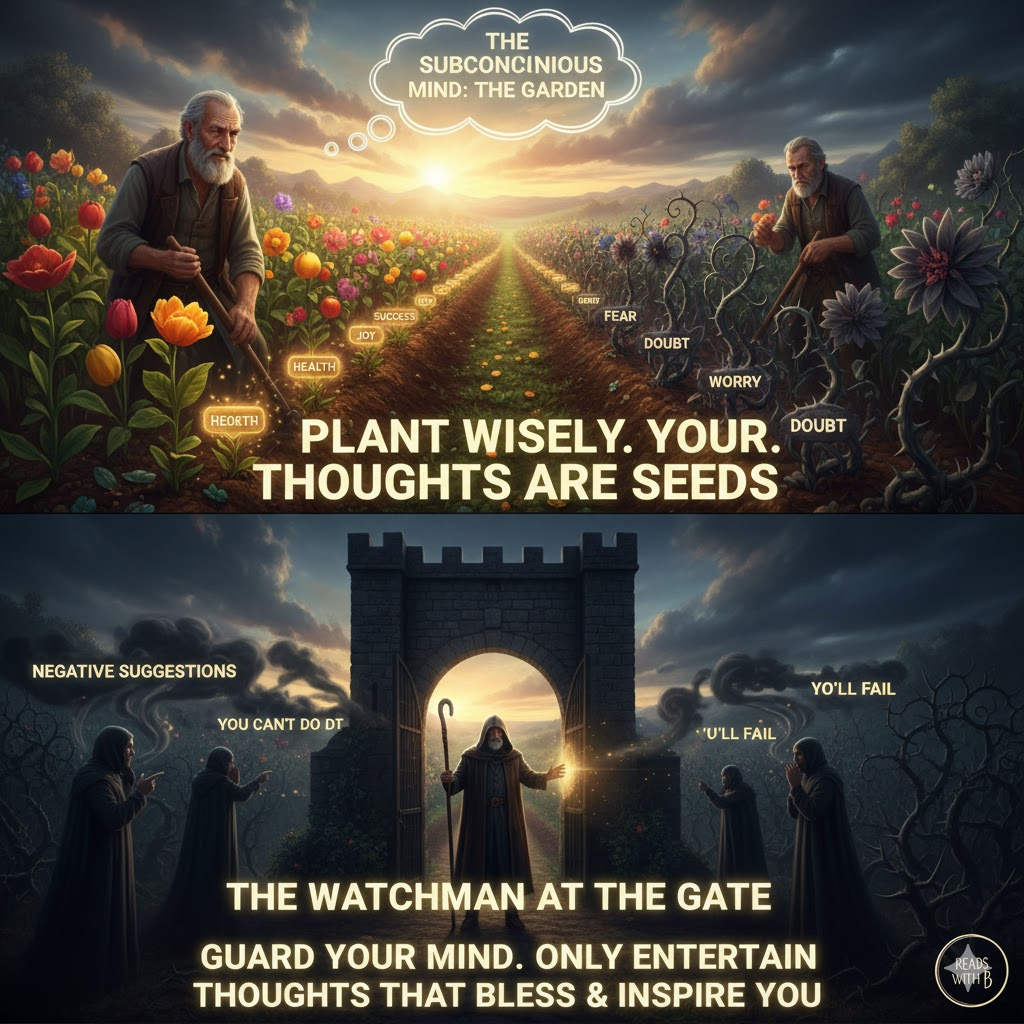
Think of your subconscious as a piece of land. If you plant seeds of fear, it doesn’t care; it will grow fear. If you plant seeds of success, it grows success.

  • Key Concept: Heterosuggestion. This is the power of other people’s words. You must learn to reject negative suggestions from others.
  • Takeaway: You are the “Watchman at the Gate.” Only let thoughts that bless and inspire enter your mind.

Chapter 3: The Miracle-Working Power of Your Subconscious

Your subconscious controls your heartbeat and breathing 24/7. It knows every cell in your body.

  • Key Concept: Subjective Logic. Your subconscious doesn’t need proof; it takes your word for it.
  • Takeaway: By telling your subconscious “I am healthy,” you provide the blueprint it needs to repair your physical body.

Chapter 4 & 5: Mental Healings (Ancient & Modern)

Whether it’s a holy relic or a modern doctor, the “healing” happens because the patient believed it would happen.

  • Key Concept: Absent Treatment. You can influence the health of others by projecting thoughts of health toward them.
  • Takeaway: It doesn’t matter what you believe in; it is the act of believing that triggers the subconscious healing mechanism.

Chapter 6: Practical Techniques in Mental Healing

Murphy outlines the “Sleep Technique.” Just before you drift off, your conscious mind is quiet. This is the best time to “whisper” your goals to your subconscious.

  • Key Concept: The Baudoin Technique. Reducing your desire to a short, phrase like “It is finished” and repeating it like a lullaby.
  • Takeaway: Don’t use willpower. Use imagination.

Chapter 7 & 8: The “Lifeward” Flow and Getting Results

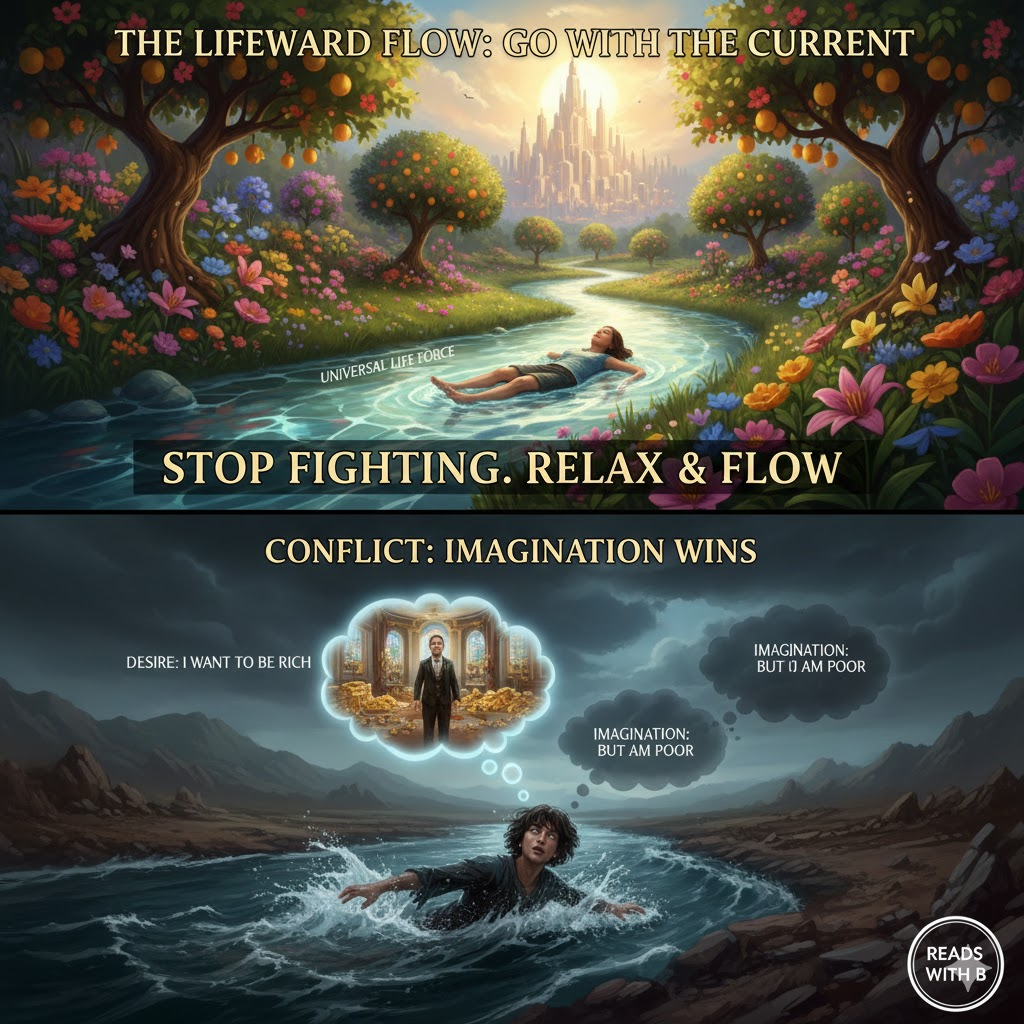
When you are sick or failing, you are fighting against the natural “Lifeward” flow of the universe.

  • Key Concept: Conflict of Desire and Imagination. If you want to be rich (Desire) but imagine you are poor (Imagination), imagination always wins.
  • Takeaway: Stop trying to force things to happen. Relax and see the end result as already achieved.

Chapter 9 & 10: Wealth and Your Right to be Rich

Wealth is simply a subconscious conviction. If you criticize rich people, you are pushing wealth away from you.

  • Key Concept: The Wealth Seed. Repeat the word “Wealth” slowly for 5 minutes before bed.
  • Takeaway: Money is a symbol. It should circulate freely in your life like blood in your body.

Chapter 11 & 12: Success and Science

Success isn’t just money; it’s peace of mind. Great scientists like Tesla used their subconscious to “see” their inventions before they built them.

  • Key Concept: The Three Steps to Success. 1. Find the thing you love to do. 2. Specialize in it. 3. Make sure your goal isn’t just for you, but for the world.
  • Takeaway: If you have a problem, ask your subconscious for the answer before bed.

Chapter 13: The Wonders of Sleep

Elaboration: You spend 1/3 of your life asleep. During this time, your subconscious is processing your day and preparing your tomorrow.

  • Key Concept: Sleep Guidance. If you have a tough decision, say “The subconscious intelligence is guiding me.”
  • Takeaway: Never go to sleep thinking about your problems; go to sleep thinking about the solutions.

Chapter 14 & 15: Marriage and Happiness

Relationships fail when people try to change their partner instead of their own mental attitude.

  • Key Concept: The Happiness Habit. Happiness is a choice you make every morning.
  • Takeaway: To attract the right partner, list the qualities you want and dwell on them. You will attract what you radiate.

Chapter 16 & 17: Human Relations and Forgiveness

You cannot be happy if you hold a grudge. Resentment acts as a “blockage” to your own success.

  • Key Concept: The Mental Mirror. How you feel about others is a reflection of how you feel about yourself.
  • Takeaway: Forgiving someone doesn’t mean you like them; it means you are letting go of the negative energy for your own sake.

Chapter 18 & 19: Removing Blocks and Fear

Fear is just a “thought in your mind.” It has no power except what you give it.

  • Key Concept: Substitution. You cannot “fight” a bad habit. You must replace it with a better one.
  • Takeaway: If you are afraid of something, do it. The subconscious will back you up once you take the first step.

Chapter 20: How to Stay Young in Spirit Forever

Elaboration: Age is not the passage of years, but the dawn of wisdom.

  • Key Concept: Mental Vitality. Keep your mind open to new ideas, and you will never grow “old.”
  • Takeaway: Retirement is a new opportunity to use the wisdom you’ve gained over the years.

💡 Key Takeaways:

  1. The Law of Belief: The law of life is not the law of “things,” but the law of belief. Your subconscious responds to what you honestly believe is true.
  2. The “Captain” Analogy: Your conscious mind is the captain. If the captain gives wrong orders (negative thoughts), the ship (your life) goes off course. You must give the order: “I am safe, healthy, and prosperous.”
  3. Visualization: If you want something, create a mental movie of it. Feel the reality of the scene in your mind until your subconscious accepts it as a fact.
  4. The Power of Forgiveness: Holding onto resentment is like taking poison and waiting for the other person to die. To heal your life, you must release others mentally.


💬 Key Quotes to Live By

“Busy your mind with the concepts of harmony, health, peace, and goodwill, and wonders will happen in your life.”

“The feeling of wealth produces wealth; keep this in mind at all times.”

“You are the captain of your soul and the master of your fate. Remember, you have the capacity to choose. Choose life! Choose love! Choose health!”

“Never finish a negative statement; reverse it immediately, and wonders will happen in your life.”

Final Tip: Dr. Murphy recommends reading this book at least three times. The first time for the concepts, the second for the techniques, and the third to make it a way of life!

Ego is the Enemy by Ryan Holiday

Ryan Holiday explores how ego – our inflated sense of self – is the biggest obstacle to personal and professional success. Divided into three sections (Aspire, Success, and Failure), the book illustrates how ego sabotages us at different stages of life and provides actionable strategies to control it.

May be you’re young and brimming with ambition or strugglingg…

May be you’ve made lot of money, accomplished enough to last a lifetime…

May be you’re stunned to find out how empty it is at the top…

Maybe you’re charged with leading others through a crisis…

Maybe you just got fired or hit rock bottom…

Wherever you are, whatever you are doing, your worst enemy already lives inside you: your EGO.

“Not me”, you think… “No one would ever call me an egomaniac.”.  Perhaps you’ve always thought of yourself as a pretty balanced person.  But for people with ambitious, talents, drives and potential to fulfill, ego comes with the territory.  Precisely what makes us so promising as Thinkers, Doers, Creatives and Entrepreneurs, what drives us to the top of those fields, makes us vulnerable to this darker side of the psyche.

1. Aspire – The Dangers of Early Ego

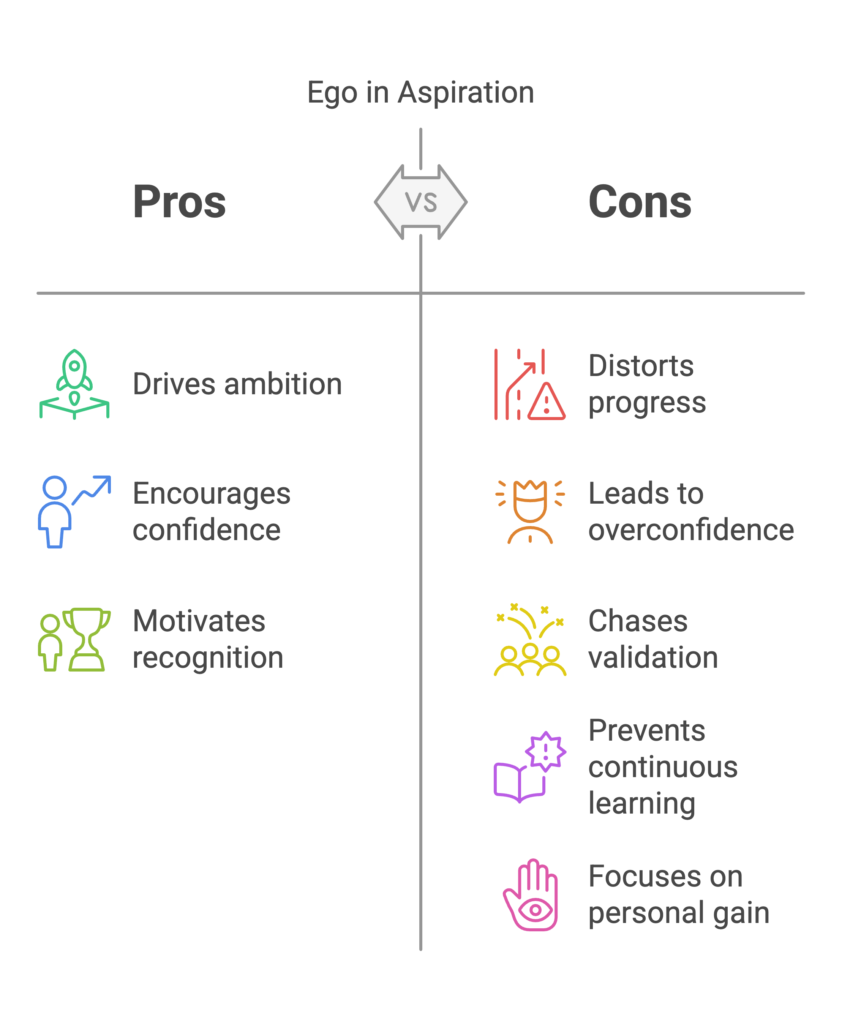
Aspiration is essential, but ego distorts it, making us seek validation instead of real progress.

Key Lessons:

  • Talk Less, Do More: Overconfidence leads to talking about goals instead of achieving them.
  • Be a Lifelong Student: Learning and humility go hand in hand.
  • Work for a Cause, Not Applause: Pursue meaningful work rather than chasing status.

Key Quotes:

Those who know do not speak. Those who speak do not know. – Lao Tzu

Impressing people is different from being truly impressive.

Ego Trigger Points in Aspiration

ChapterEgo Trigger Points
The Ego Is the EnemyBelieving success is guaranteed due to talent or intelligence.
To Be or To Do?Prioritizing recognition over meaningful work.
Become a StudentThinking you already know everything and refusing to learn.
Don’t Be PassionateMistaking raw enthusiasm for competence and execution.
Follow the Canvas StrategyExpecting immediate rewards instead of serving others first.
Restrain YourselfActing impulsively and letting emotions dictate decisions.
Get Out of Your Own HeadOverthinking and becoming paralyzed by self-importance.
The Danger of Early PrideBecoming complacent or arrogant after small wins.
Work, Work, WorkSeeking validation rather than focusing on consistent effort.
For Everything That Comes Next, Ego Is the EnemyThinking success makes you immune to failure.

2. Success – Ego Can Destroy What You Build

Once we achieve success, ego tempts us to believe we are special, making us complacent and resistant to feedback.

Key Lessons:

  • Stay a Student: The best leaders continue to learn despite their achievements.
  • Detach from the Need for Recognition: True success is about contribution, not applause.
  • Don’t Believe Your Own Hype: Many successful people fail because they overestimate their abilities.

Key Quotes:

Ego is the enemy of what you want and of what you have.

A person who thinks they have arrived has already begun their departure.

Ego Trigger Points in Success

ChapterEgo Trigger Points
Thinking success makes you immune to failure.Believing you’ve “made it” and no longer need to learn.
Don’t Tell Yourself a StoryCreating a self-serving narrative about your success.
What’s Important to You?Chasing external recognition over true priorities.
Entitlement, Control, and ParanoiaFeeling owed success, trying to control everything, or fearing threats.
Managing YourselfLetting success inflate your ego and lower your self-awareness.
Beware the Disease of MeThinking you are more important than the team.
Meditate on the ImmensityFocusing only on personal success rather than the bigger picture.

3. Failure – Ego Makes Setbacks Worse

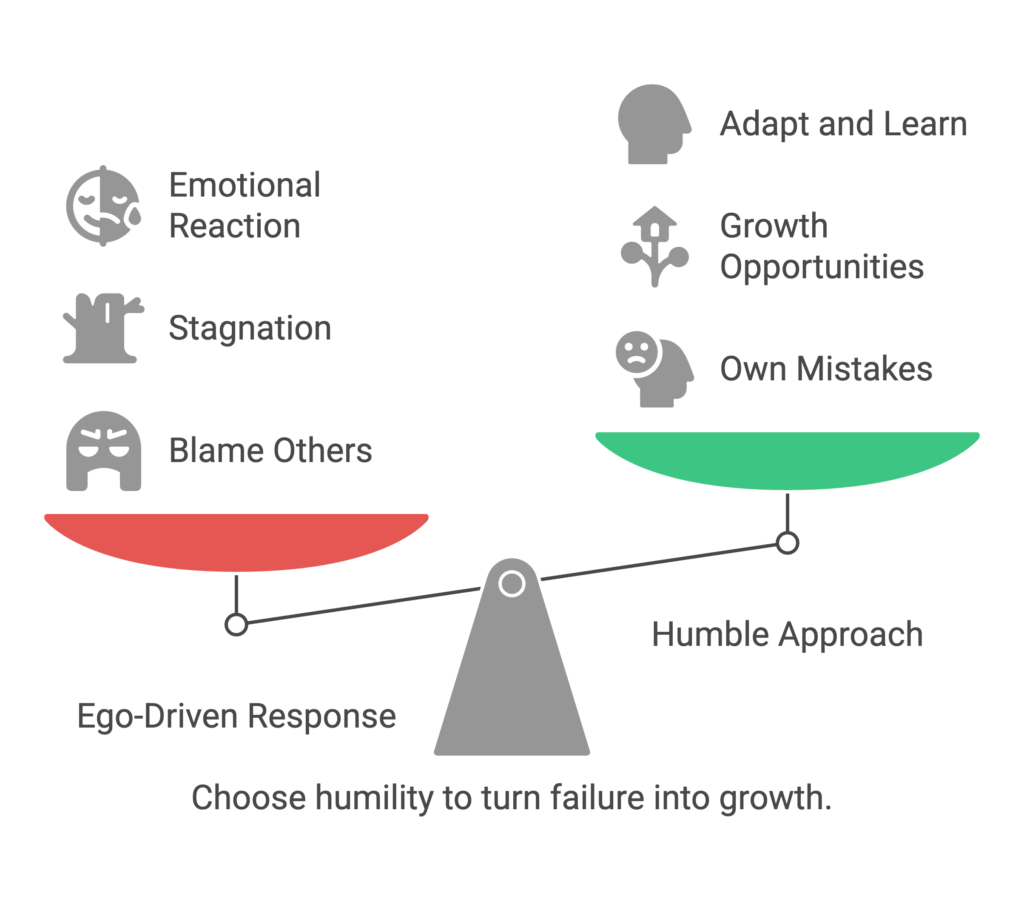
Failure is inevitable, but ego turns it into a crisis instead of a learning opportunity.

Key Lessons:

  • Own Your Mistakes: Take responsibility instead of blaming others.
  • Use Setbacks as Fuel: Many successful people grew because of their failures.
  • Stay Humble and Keep Moving: Don’t let failure define you.

Key Quotes:

Almost always, your roadblock is yourself.

The ability to learn from failure is a skill that must be developed.

Ego Trigger Points in Failure

ChapterEgo Trigger Points
Alive Time or Dead Time?Wasting time wallowing in failure instead of learning.
The Effort Is EnoughFeeling entitled to specific outcomes rather than valuing the process.
Fight Club MomentsAvoiding necessary hardship and self-reflection.
Draw the LineCompromising integrity for short-term gain.
Maintain Your Own ScorecardMeasuring success by external validation instead of internal standards.
Always LoveHolding onto resentment or bitterness after failure.
For Everything That Comes Next, Ego Is Still the EnemyLetting failure define you or make you give up.

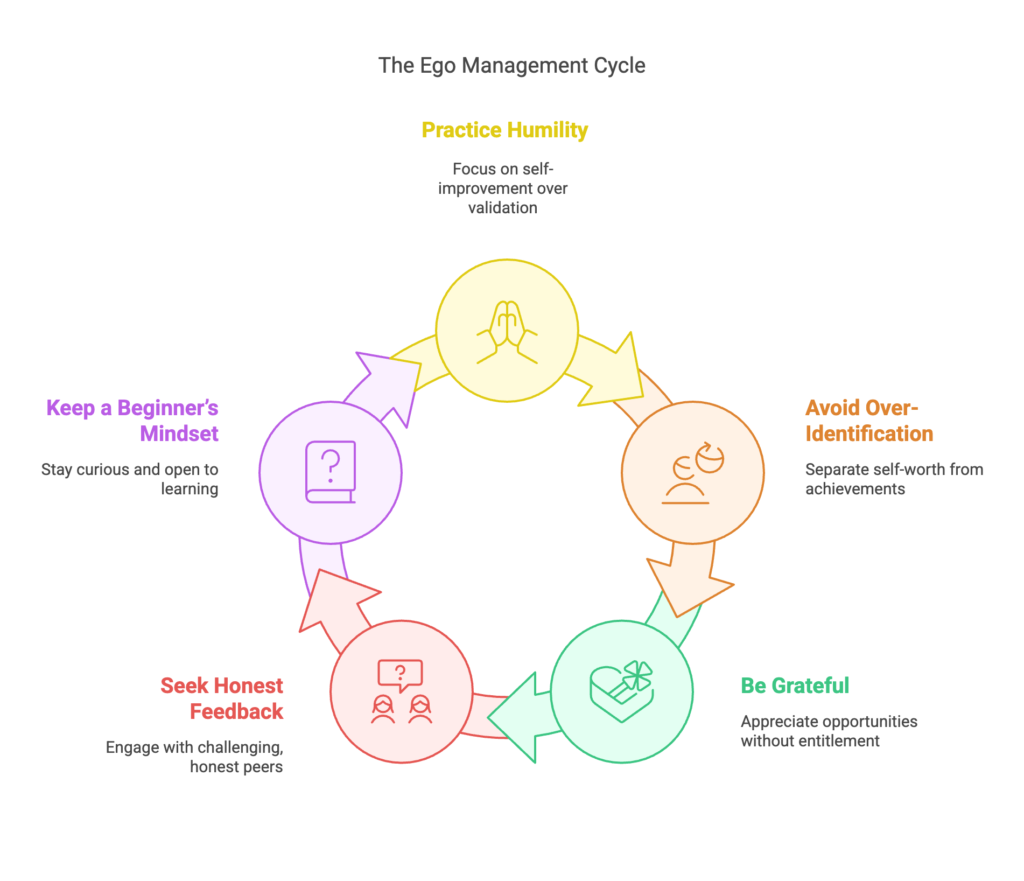
Conclusion – How to Keep Ego in Check

  • Practice Humility Daily: Focus on continuous improvement.
  • Avoid Over-Identification with Success or Failure: They don’t define your worth.
  • Be Grateful, Not Entitled: Appreciate opportunities instead of expecting them.

Final Thought:

Ego is a lifelong battle. Whether aspiring, succeeding, or failing, staying humble, adaptable, and disciplined leads to true fulfillment.


Attachment

To download the summary for offline read, please click here

Stillness Speaks by Eckhart Tolle

Albert Einstein said

Stand still.  The trees ahead and bush beside you are not lost.

If we connect to the stillness within, we move beyond our active minds and emotions and discover great depths of lasting peace, contentment and serenity. Some important teachings that I learnt from the book “Stillness Speaks”.

1. Silence and Stillness

When you lose touch with inner stillness, you lose touch with yourself.  When you lose touch with yourself, you lose yourself in the world.

Stillness is awareness
The equivalent of external noise is the inner noise of thinking.
The equivalent of external silence is inner silence.

Whenever there is some silence around you – notice it.  In the moment of noticing the silence around you, you are not thinking.  You are aware, but not thinking.  When you become aware of silence, immediately there is that state of inner still alertness.  You are present.

When you look  at a tree and perceive its stillness, you become still yourself.  You connect with it at a very deep level.

2. Beyond the Thinking Mind

The human condition: lost in thought

Don’t take your thoughts too seriously.

The human mind, in its desire to know, understand, and control, mistakes its opinions and viewpoints for the truth.  You have to be larger than thought to realize that however you interpret “your life” or someone else’s life, it is no more than a viewpoint, one of many possibilities.   

When you feel bored, you can satisfy the mind’s hunger by picking up a magazine, watching TV, making phone call – Your mind is hungry for more stimulus, more food for thought.  Try to stay bored and restless and observe what is feels like.  As you bring awareness to the feeling, there is sudden space and stillness around it.  “Bored person” is not who you are.  It is simply a conditioned energy movement within you.  Boredom, anger, sadness or fear are not “yours”, not personal.  They come and go.

3. The Egoic Self

The mind is incessantly looking not only for food for thought; it is looking for food for its identity, its sense of self.  This is how the ego comes into existence and continuously re-creates itself.

Complaining and reactivity are favorite mind patters through which the ego strengthens itself.  By doing this, you make others or a situation “wrong” and yourself  “right”.  Through being “right”, you feel superior, and through feeling superior, you strengthen your sense of self.  In reality, you are only strengthening the illusion of ego.

The ego needs to be in conflict with something or someone.  That explains why you are looking for peace and joy and love but cannot tolerate them for very long.  You say you want happiness but are addicted to your unhappiness.  

If you set egoic goals for the purpose of freeing yourself, enhancing yourself or your sense of importance , even if you achieve them, they will not satisfy you.  Set goals, but know that the arriving is not all that important.

4. The Now

When you make friends with the present moment, you feel at home no matter where you are.  When you don’t feel at home in the Now, no matter where you go, you will carry unease with you.

The division of life into past, present and future is mind-made and ultimately illusory.  Past and future are thought forms, and can be remembered Now.  

5. Who You Truly Are

Self-Realization : Knowing who you are beyond the surface self – beyond your name, your physical form, your history, your story.

Most people’s lives are run by desire and fear.

Desire is the need to add something to yourself in order to be yourself more fully.

Fear is the losing something and thereby becoming diminished and being less.

You cannot find yourself in the past or future.  The only place where you can find yourself is in the Now. 

6. Acceptance and Surrender

Have you ever verbalized your inner reality  saying, “I don’t want to be where I am”? – like the traffic jam, your place or work, the people you are with etc.  It is true, of course, that some places are good places to walk out of –  and sometimes that may well be the appropriate thing for you to do.  In many cases, however, walking out is not an option.  “I don’t want to be here” is not only useless but also dysfunctional.  It makes you and others unhappy.

Do not have a reactive like/dislike  relationship in life where you are in almost continuous conflict with situation and people.  The habitual and reactive “no” strengthens the ego.  “Yes” weakens it.  You form identify, the ego, cannot survive surrender.

Doing one thing at a time – the essence of Zen

Doing one thing at a time means to be total in what you do, to give it your complete attention.  This is surrendered action – empowered action.

Surrender becomes so much easier when you realize the fleeting nature of all experiences and that the world cannot give you anything of lasting value.  You no longer demand that a situation, person, place or event should satisfy you or make you happy.  

When you no longer place an impossible demand on a situation, person, place or event becomes not only satisfying but also more harmonious, more peaceful.

Surrender comes when you no longer ask, “Why is this happening to me?”.

Acceptance of the unacceptable is the greatest source of grace in the world.  Whatever you accept completely will take you to peace, including the acceptance that you cannot accept, that you are in resistance.

Leave Life alone.  Let it be.

7. Nature

Whenever you bring your attention to anything natural, that has come into existence without human intervention, you step out of the prison of conceptualized thinking.  When walking or resting in nature, honor that realm by being there fully.  Be still.  Look.  Listen.  See how every animal and every plant is completely itself.  Unlike humans, they have not split themselves into two.  They do not live through mental images of themselves, so they do not need to be concerned with trying to protect and enhance those images.  The deer is itself.  The daffodil is itself.

8. Relationships

How quick we are to form an opinion of a person, to come to a conclusion about them.  It is satisfying to the egoic mind to label another human being, to give them a conceptual identity, to pronounce righteous judgement upon them.  Every human being has been conditioned to think and behave in certain ways – conditioned genetically as well as by their childhood experiences and their cultural environment.

When you pronounce judgement upon someone, that is not who they are, but that is who appear to be.  To let go of judgement does not mean that you don’t see what they do.  It means that you recognize their behavior as a form of conditioning, and you see it and accept it as that.  You don’t construct an identity out of it for that person.  That liberates you as well as the other person from identification with conditioning, with form, with mind.  The ego then no longer runs your relationships.

As long as  the ego runs your life, most of your thoughts, emotions, and actions arise from desire and fear.  In relationships you then either want or fear something from the other person.

What you want from them may be pleasure or material gain, recognition, praise or attention, or a strengthening of your sense of self through comparison and through establishing that you are, have or know more than they.  

What you fear that the opposite may be the case, and they diminish your sense of self in some way.  

Love does not want or fear anything. It is wonderful to go beyond wanting and fearing in your relationships.

If someone’s past were your past, their pain your pain, their level of consciousness your level of consciousness, you would think and act exactly as they do.  With this realization comes forgiveness, compassion, peace.  The ego doesn’t like to hear this, because if it cannot be reactive and righteous anymore, it will lose strength.

Most human interactions are confined to the exchange of words.  It is essential to bring some stillness, particularly into your close relationships.  No relationship can thrive without the sense of spaciousness that comes with stillness.  Meditate or spend silent time in nature together.  When going for a walk or sitting in the car or at home, become comfortable with bring in stillness together.  

If spacious stillness is missing, the relationship will be dominated by the mind and can easily be taken over by problems and conflict.  If stillness is there, it can contain anything.

The root of frequent and repetitive drama in close relationships (insignificant disagreements triggering arguments and emotional pain) lies in the basic egoic patterns:  the need to be right and for someone else to be wrong.  There is also the ego’s need to be periodically in conflict with something or someone in order to strengthen its sense of separation between “me” and the “other” without which it cannot survive.

9. Death and Eternal

When you walk through a forest that has not been tamed and interfered with by man, you will see not only abundant life all around you, but you will also encounter fallen trees and decaying trunks, rotting leaves and decomposing matter at every step.  Wherever you look, you will find death as well as life.

Upon close look, you will discover that the decomposing tree trunk and rotting leaves not only give birth to new life, but are full of life themselves.  Microorganisms are at work.  So death isn’t to be found anywhere.  There is only the metamorphosis of life forms.

Death is not the opposite of life.  Life has no opposite.  The opposite of death is birth.  Life is eternal.

Everyone is going to die, but that remains a mere mental concept until one meets death “in person” – through serious illness, or an accident of through the passing away of a love one.  Most people turn away from it in fear, but if you do not flinch and face that your body is fleeting and could dissolve at any moment, there is some degree of disidentification, from your own physical and psychological form, the “me”.  When you see and accept the impermanent nature of all life forms, a strange sense of peace comes upon you.

People tend to be uncomfortable with endings, because every ending is a little death.  That’s why in many languages, the word for “good-bye” means “see you again.”

Whenever an experience comes to an end – a gathering of friends, a vacation, your children leaving home – you die a little death.  A “form” that appeared in your consciousness as that experience dissolves.  Often this leaves behind a feeling of emptiness that most people try hard not to feel, not to face.

If you can learn to accept and even welcome the endings in your life, you may find that the feeling of emptiness that initially felt uncomfortable turns into a sense of inner spaciousness that is deeply peaceful.

By learning to die daily in this way, you open yourself to Life.

10. Suffering and the End of Suffering

Is suffering really necessary?  Yes and No.

If you had not suffered as you have, there would be no depth to you as human being, no humility, no compassion.  Suffering cracks open the shell of ego, and then comes a point when it has served its purpose.  Suffering is necessary until you realize it is unnecessary.  

Much suffering, much unhappiness arises when you take each thought that comes into your head for the truth.  Situations don’t make you unhappy.  They may cause you physical pain, but they don’t make you unhappy.  Your thoughts, your interpretations, the stories you tell yourself make you unhappy.

What a miserable day.  

He didn’t have the decency to return my call.

She let me down.

Little stories we tell ourselves and others, often in the form of complaints.  They enhance our self of being “right” and making something or someone “wrong”.  Being “right” places us in a position of imagined superiority and so strengthens our false sense of self, the ego.  

Life would be simple without  such stories.

Suffering begins when you mentally name or label a situation is some way as undesirable or bad.  Start practicing “not naming” with small things.  If you miss a plane, drop and break a cup, or slip and fall, refrain from naming the experience as bad or painful.  Naming something as bad causes an emotional contraction within you.  When you let it be, without naming it, enormous power is suddenly available to you.

© 2026 readswithb.com

Theme by Anders NorénUp ↑