
Author: Bharathi (Page 1 of 2)

The Quiet Mind: Understanding Yourself From the Inside Out

A reflective exploration of what it means to live deeply in a surface-level world

There is a certain kind of person who can stand in front of a tree and feel like it is trying to tell them something. Who looks at a mountain and doesn’t see rock and height — but groundedness and quiet strength. Who watches water and thinks not about its chemistry but about its wisdom: it just keeps doing its work.

If you recognize yourself in that description, this is written for you.

You probably don’t talk this way in daily life. At work you deal in deadlines and deliverables. At home you cook, manage, provide. On the surface you might even seem materialistic, or selfish, or ordinary. But inside, there is a whole other world running — quiet, deep, and constantly asking questions that don’t have easy answers.

The Leaf and the Tree: What Nature Is Trying to Tell You

Consider the tree. Leaves come in spring, full of life and colour. By autumn they fall. Their entire existence lasts perhaps nine or ten months. But the tree stands through all of it — with leaves, without leaves, in storm and in stillness. The leaf is not the tree. The tree is not the forest. Each level contains the one below it and is held by something larger above.

Your mind, when you watch this, is sensing something philosophers call nested hierarchies of existence. The pattern is more permanent than the thing carrying the pattern. The tree’s nature — its branching logic, its seasonal rhythm, its relationship with soil and light — outlasts any individual leaf, and repeats across millions of trees across millions of years.

Apply that to human beings. We live, on average, eighty or eighty-five years. We die. So do animals — each with their own span. And the question your mind instinctively asks is: are we the leaf, or are we the tree? And if we are the leaf — what is the tree we belong to? That question is not a religious one. It is a deeply human one. And it may not have a final answer. But the asking of it is itself significant.

Reading Nature as a Mirror

When you look at a mountain, you don’t think ‘large’ or ‘impressive.’ You feel grounded. When you watch water, you don’t think about rivers and rainfall. You feel calm, and you notice that water simply keeps doing its work — without announcement, without resistance, without needing to be seen.

This is not casual observation. This is your mind doing something quite sophisticated — extracting principles from physical reality and translating them into wisdom about existence. You are reading nature as a mirror.

Lao Tzu built an entire philosophy around water. He observed that water is soft yet carves canyons, yields yet overcomes, seeks the lowest place yet sustains all life. He didn’t call it God. He called it the Tao — the underlying principle of how things work. You are arriving at the same observations independently, through your own direct experience, without any framework telling you what to see. That is not a small thing.

The Greater Adventure: Knowing Yourself

People say we must travel, experience different cultures, taste different foods, collect the world. And there is real value in that. But you sense something that many travellers never do — that the one doing all the experiencing has never been properly examined.

The world outside offers infinite content. It comes toward you. You receive it. But when you turn inward, nothing comes. You have to go searching in the dark, for something that keeps moving, using the very instrument you are trying to understand. Your mind trying to understand your mind is like an eye trying to see itself. It requires a completely different kind of effort — and a particular kind of honesty.

You ask: why do I get irritated, knowing it is my trigger? That single question is remarkable. Most people react and don’t notice. Others notice but blame the outside world. You notice, locate the source within yourself, and still feel puzzled — because knowing is not the same as changing. That gap between knowing and being is one of the most honest places a person can sit. It is the beginning of real self-knowledge, not the end of it.

The ancient instruction Know Thyself was not a simple suggestion. It was considered the foundation of all other wisdom. Because a person who does not know themselves will spend their entire life reacting to a world they never fully understand — including the parts of that world that are actually inside them.

What Your Thinking Pattern Reveals About You

You read people. Not just what they say, but how they are. You observe, build a working model, test it against their behaviour. You are curious about why people think the way they think, and you are often quietly accurate in your predictions.

To do this well, you must carry a rich internal library of human motivations and emotional patterns. You can only recognize in others what you have somehow already understood. Which means your ability to read people is actually evidence of how much inner work you have quietly done — even if you never called it that.

You take personality tests — enneagram, Myers-Briggs, DISC, and others. Not really to find a label. But because the same drive that makes you read nature and people turns on yourself — and there, it loses its clean vantage point. You cannot see yourself from the outside. The tests feel like they might offer what you cannot give yourself: an outside view of your own inside. When a description nails something true about you, there is a moment of relief. Someone articulated this. Which means I am not alone in it. Which means I am not strange.

The Gap Between Inside and Outside

In daily life you do not sound philosophical. You navigate deadlines, handle practical matters, deal in the language the world runs on. This is not hypocrisy. This is adaptation. The world requires a certain dialect and you have learned to speak it. But it is not your mother tongue.

Surface conversation drains you. Not because you dislike people, but because small talk offers nothing to actually engage with. There is no pattern to decode, no depth to explore. For a mind that feeds on substance, surface conversation is empty calories. You go through the motions but come away strangely unfulfilled.

Your confidence fluctuates — not because you are inconsistent, but because your environment is. In conversations of real depth, in problems requiring genuine thinking, in moments requiring perception and insight — you are quietly unshakeable. Put you in a room running on performance and presentation and your confidence drops. Not because you became less capable. But because the game being played is one your nature was not built for.

Solitude Is Not Withdrawal — It Is Restoration

You want your morning tea alone. You eat lunch alone at work. You cook with headphones on, listening to something that doesn’t demand anything of you. On weekends you shop, cook, sit at home, watch television. You don’t feel like going out. And somewhere, you wonder if something is wrong with you.

Nothing is wrong with you.

You have a high-intensity inner world that runs continuously. Every social interaction requires you to read the room, manage how you come across, navigate surface conversation that does not suit you, and adapt to others’ energy. That is exhausting in a way that is hard to explain to people who do not experience it. They think you are just sitting at a dinner table. You are working quite hard beneath the surface the entire time.

The solitude is not emptiness. It is when you are most full. The morning tea, the solo lunch, the headphones — these are maintenance. Not antisocial behaviour. Not laziness. Your nervous system protecting the conditions it needs to function at its best.

You cook for your family. You show up at work thoroughly. You handle what needs to be handled — consistently, reliably, without drama. And then you return to yourself. That returning is not selfishness. It is how you remain capable of giving at all.

What Kind of Person Are You, In Short

You are a deeply contemplative, pattern-seeking mind living inside a practical, everyday person. That gap between the two is the central tension of your life.

You don’t take things at face value — not nature, not people, not yourself. You go beneath the surface looking for the principle, the logic, the pattern underneath. You carry analytical intelligence alongside emotional depth. You believe in science and think systematically, but you also feel the mountain and hear the tree. Most people are one or the other. You carry both.

You are self-aware almost to a fault. You see your triggers, your gaps, your contradictions with uncomfortable clarity. The frustration is not lack of awareness — it is that awareness alone does not automatically change things. You know this, and it bothers you. That bothering is itself a sign of integrity.

And underneath all of it — the nature observations, the philosophical questions, the people-reading, the self-examination — there is one question your mind keeps circling in different forms: Is there something larger that holds all of this together? You haven’t answered it. You may never fully answer it. But you keep asking it — through observation and not faith, through science and not doctrine. And that search itself is probably the most honest thing about you.

A Note to Anyone Who Recognizes Themselves Here

If you have read this far and felt, at various points, that someone was describing you — you are not alone. You are part of a quiet group of people who live primarily from the inside out, who find surface life draining, who carry questions they cannot fully articulate, who are regularly underestimated by the world around them.

The world is loud about what a good life looks like — busy, social, productive, visible. Your life probably looks different from the outside. Quieter. More contained. Possibly even smaller by conventional measures.

But the life happening inside you is not small. It is expansive, searching, and genuinely alive in ways that are hard to see from the surface.

The tree does not perform its growth. It simply grows. And it stands — with leaves and without — through everything.

So do you.
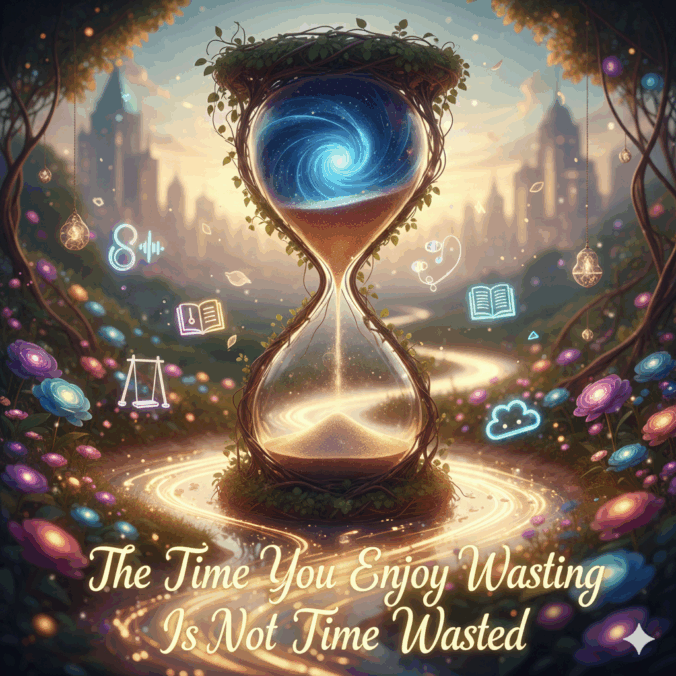
The Time You Enjoy Wasting Is Not Time Wasted

I wasn’t looking for wisdom today morning. I was just standing on the Metro platform, air-pods on, listening to some random YouTube conversation that served absolutely no purpose. Usually, I listen to podcasts during my commute—something informative or some A.R. Rahman Tamil songs. But today? My brain just wasn’t having it. I needed the mental equivalent of junk food.

That’s when I saw it— a woman standing near me with a tote bag printed: “The time you enjoy wasting is not time wasted.”

It stopped me mid-scroll. The timing was almost comedic.

You know that feeling when a random sentence somehow speaks directly to whatever you’ve been wrestling with? That was it. I’d been carrying around this low-grade guilt about how I spend my time. The Sunday afternoons that dissolve into nothing. The evenings where I achieve absolutely zero. The moments when I’m not learning, growing, optimizing, or checking things off some invisible list.

But this quote—caught in passing, on a stranger’s bag—made me pause.

The Productive Paradox

Here’s the thing: I believe in productivity. I like getting things done. There’s real satisfaction in a completed task, a finished project, progress made. But somewhere along the way, I also started believing that every moment needed to count. That rest was something you earned. That doing “nothing” required justification.

The irony? This mindset doesn’t even make me more productive. It just makes me tired.

I’m not saying I’m constantly grinding or burning out—it’s more subtle than that. It’s just this background hum of feeling like I should be doing something more worthwhile. Like relaxation needs to have a purpose, or rest needs to be “productive rest.” Even when life is balanced, that little voice is there, quietly questioning whether this moment could be better spent.

Permission to Just Be

What if the afternoon you spent watching terrible reality TV wasn’t wasted—it was exactly what you needed? What if that long conversation that went nowhere in particular was actually going somewhere important, just not measurable? What if staring out the window, letting your mind drift, playing that game one more time, or rereading that book for the third time wasn’t laziness but restoration?

I’m learning (slowly) that joy and rest don’t need to justify themselves. They’re not rewards we unlock after enough productivity points. They’re part of what makes life worth living in the first place.

It’s Okay to Not Be Okay

I still feel that internal tug-of-war. Part of me wants to hustle, achieve, optimize. Another part just wants to sit in the park and watch the clouds. And you know what? Both are okay. Both are me. Maybe both are you too.

Some days you’ll crush your goals. Other days you’ll accomplish nothing and feel fine about it. Some days you’ll accomplish nothing and feel terrible about it. All of these are valid. We’re allowed to be contradictions. We’re allowed to not have it figured out.

So here’s what I took from that tote bag wisdom: maybe we stop being so hard on ourselves. Maybe we let go of the idea that we have to be “on” all the time. Maybe we give ourselves permission to enjoy the so-called wasted moments, because they might be the ones we remember most.

Or maybe not. Take what resonates, leave what doesn’t.

After all, even this reflection might just be another way I’m wasting time—and I’m enjoying every minute of it 🙂


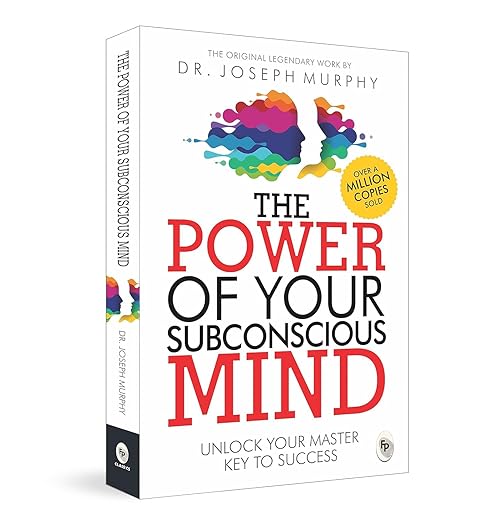
The Power of your Subconscious Mind by Dr. Joseph Murphy

Core Theme: Your mind is a “treasure house.” By changing your habitual thinking and mental imagery, you can literally rewire your destiny.

🌟 The Big Idea

Joseph Murphy posits that we have one mind with two distinct functional parts: the Conscious (Objective) and the Subconscious (Subjective).

  • The Conscious Mind is the captain of the ship; it reasons and chooses.
  • The Subconscious Mind is the engine room; it doesn’t argue, it simply obeys the orders (thoughts) sent by the conscious mind.

Chapter 1: The Treasure House Within You

Murphy argues that most people are “magnetized”—they believe they are born to succeed. Others are “demagnetized”—filled with fear and doubt.

  • Key Concept: The Master Secret is the discovery of the subconscious mind.
  • Takeaway: Stop looking for “luck” or external help. The power to heal your body and solve your finances is already inside you.

Chapter 2: How Your Own Mind Works

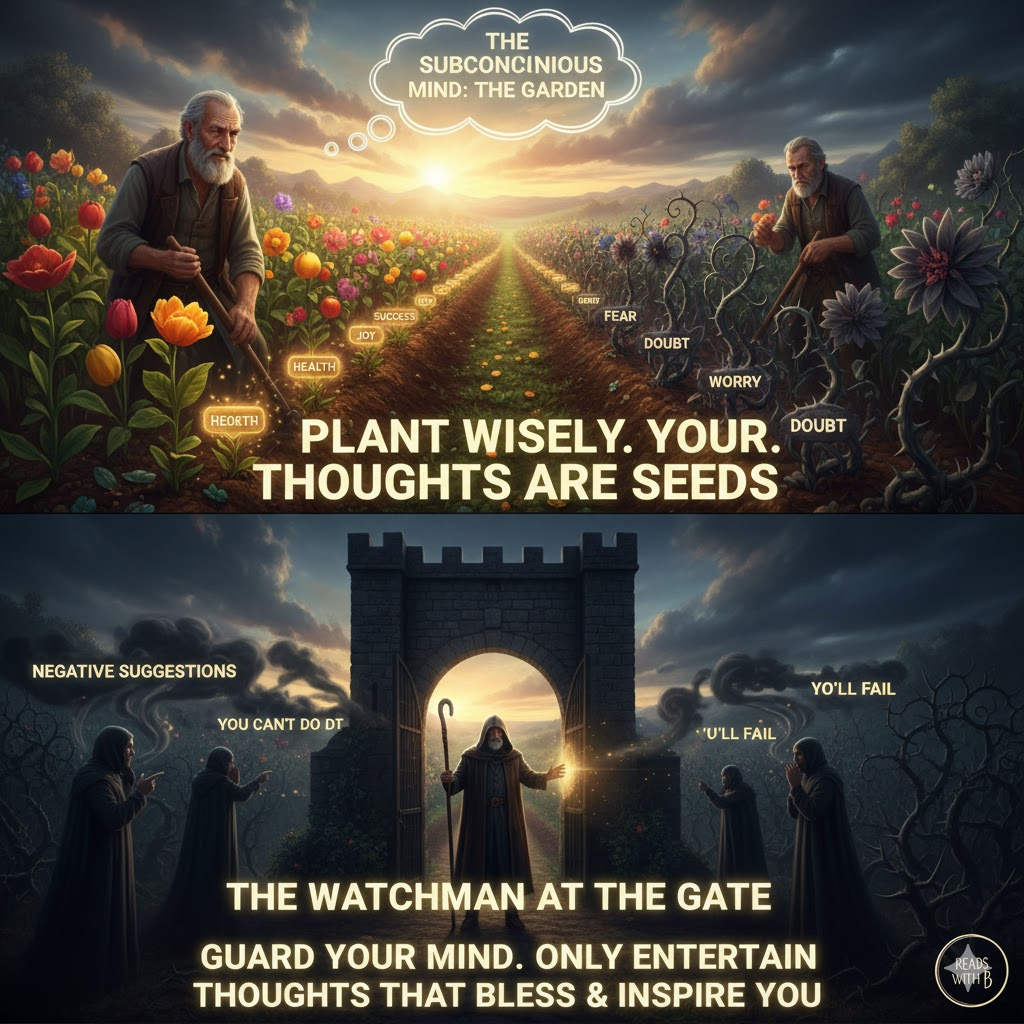
Think of your subconscious as a piece of land. If you plant seeds of fear, it doesn’t care; it will grow fear. If you plant seeds of success, it grows success.

  • Key Concept: Heterosuggestion. This is the power of other people’s words. You must learn to reject negative suggestions from others.
  • Takeaway: You are the “Watchman at the Gate.” Only let thoughts that bless and inspire enter your mind.

Chapter 3: The Miracle-Working Power of Your Subconscious

Your subconscious controls your heartbeat and breathing 24/7. It knows every cell in your body.

  • Key Concept: Subjective Logic. Your subconscious doesn’t need proof; it takes your word for it.
  • Takeaway: By telling your subconscious “I am healthy,” you provide the blueprint it needs to repair your physical body.

Chapter 4 & 5: Mental Healings (Ancient & Modern)

Whether it’s a holy relic or a modern doctor, the “healing” happens because the patient believed it would happen.

  • Key Concept: Absent Treatment. You can influence the health of others by projecting thoughts of health toward them.
  • Takeaway: It doesn’t matter what you believe in; it is the act of believing that triggers the subconscious healing mechanism.

Chapter 6: Practical Techniques in Mental Healing

Murphy outlines the “Sleep Technique.” Just before you drift off, your conscious mind is quiet. This is the best time to “whisper” your goals to your subconscious.

  • Key Concept: The Baudoin Technique. Reducing your desire to a short, phrase like “It is finished” and repeating it like a lullaby.
  • Takeaway: Don’t use willpower. Use imagination.

Chapter 7 & 8: The “Lifeward” Flow and Getting Results

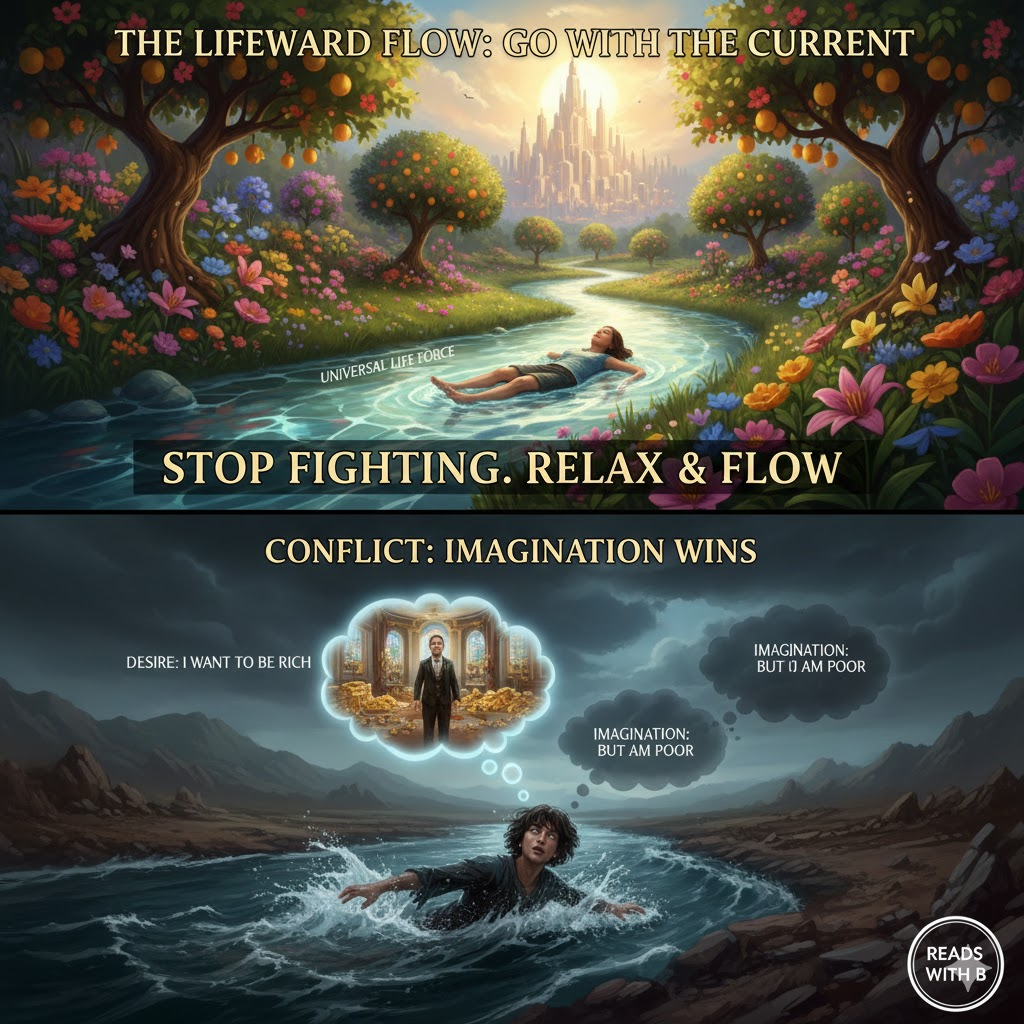
When you are sick or failing, you are fighting against the natural “Lifeward” flow of the universe.

  • Key Concept: Conflict of Desire and Imagination. If you want to be rich (Desire) but imagine you are poor (Imagination), imagination always wins.
  • Takeaway: Stop trying to force things to happen. Relax and see the end result as already achieved.

Chapter 9 & 10: Wealth and Your Right to be Rich

Wealth is simply a subconscious conviction. If you criticize rich people, you are pushing wealth away from you.

  • Key Concept: The Wealth Seed. Repeat the word “Wealth” slowly for 5 minutes before bed.
  • Takeaway: Money is a symbol. It should circulate freely in your life like blood in your body.

Chapter 11 & 12: Success and Science

Success isn’t just money; it’s peace of mind. Great scientists like Tesla used their subconscious to “see” their inventions before they built them.

  • Key Concept: The Three Steps to Success. 1. Find the thing you love to do. 2. Specialize in it. 3. Make sure your goal isn’t just for you, but for the world.
  • Takeaway: If you have a problem, ask your subconscious for the answer before bed.

Chapter 13: The Wonders of Sleep

Elaboration: You spend 1/3 of your life asleep. During this time, your subconscious is processing your day and preparing your tomorrow.

  • Key Concept: Sleep Guidance. If you have a tough decision, say “The subconscious intelligence is guiding me.”
  • Takeaway: Never go to sleep thinking about your problems; go to sleep thinking about the solutions.

Chapter 14 & 15: Marriage and Happiness

Relationships fail when people try to change their partner instead of their own mental attitude.

  • Key Concept: The Happiness Habit. Happiness is a choice you make every morning.
  • Takeaway: To attract the right partner, list the qualities you want and dwell on them. You will attract what you radiate.

Chapter 16 & 17: Human Relations and Forgiveness

You cannot be happy if you hold a grudge. Resentment acts as a “blockage” to your own success.

  • Key Concept: The Mental Mirror. How you feel about others is a reflection of how you feel about yourself.
  • Takeaway: Forgiving someone doesn’t mean you like them; it means you are letting go of the negative energy for your own sake.

Chapter 18 & 19: Removing Blocks and Fear

Fear is just a “thought in your mind.” It has no power except what you give it.

  • Key Concept: Substitution. You cannot “fight” a bad habit. You must replace it with a better one.
  • Takeaway: If you are afraid of something, do it. The subconscious will back you up once you take the first step.

Chapter 20: How to Stay Young in Spirit Forever

Elaboration: Age is not the passage of years, but the dawn of wisdom.

  • Key Concept: Mental Vitality. Keep your mind open to new ideas, and you will never grow “old.”
  • Takeaway: Retirement is a new opportunity to use the wisdom you’ve gained over the years.

💡 Key Takeaways:

  1. The Law of Belief: The law of life is not the law of “things,” but the law of belief. Your subconscious responds to what you honestly believe is true.
  2. The “Captain” Analogy: Your conscious mind is the captain. If the captain gives wrong orders (negative thoughts), the ship (your life) goes off course. You must give the order: “I am safe, healthy, and prosperous.”
  3. Visualization: If you want something, create a mental movie of it. Feel the reality of the scene in your mind until your subconscious accepts it as a fact.
  4. The Power of Forgiveness: Holding onto resentment is like taking poison and waiting for the other person to die. To heal your life, you must release others mentally.


💬 Key Quotes to Live By

“Busy your mind with the concepts of harmony, health, peace, and goodwill, and wonders will happen in your life.”

“The feeling of wealth produces wealth; keep this in mind at all times.”

“You are the captain of your soul and the master of your fate. Remember, you have the capacity to choose. Choose life! Choose love! Choose health!”

“Never finish a negative statement; reverse it immediately, and wonders will happen in your life.”

Final Tip: Dr. Murphy recommends reading this book at least three times. The first time for the concepts, the second for the techniques, and the third to make it a way of life!

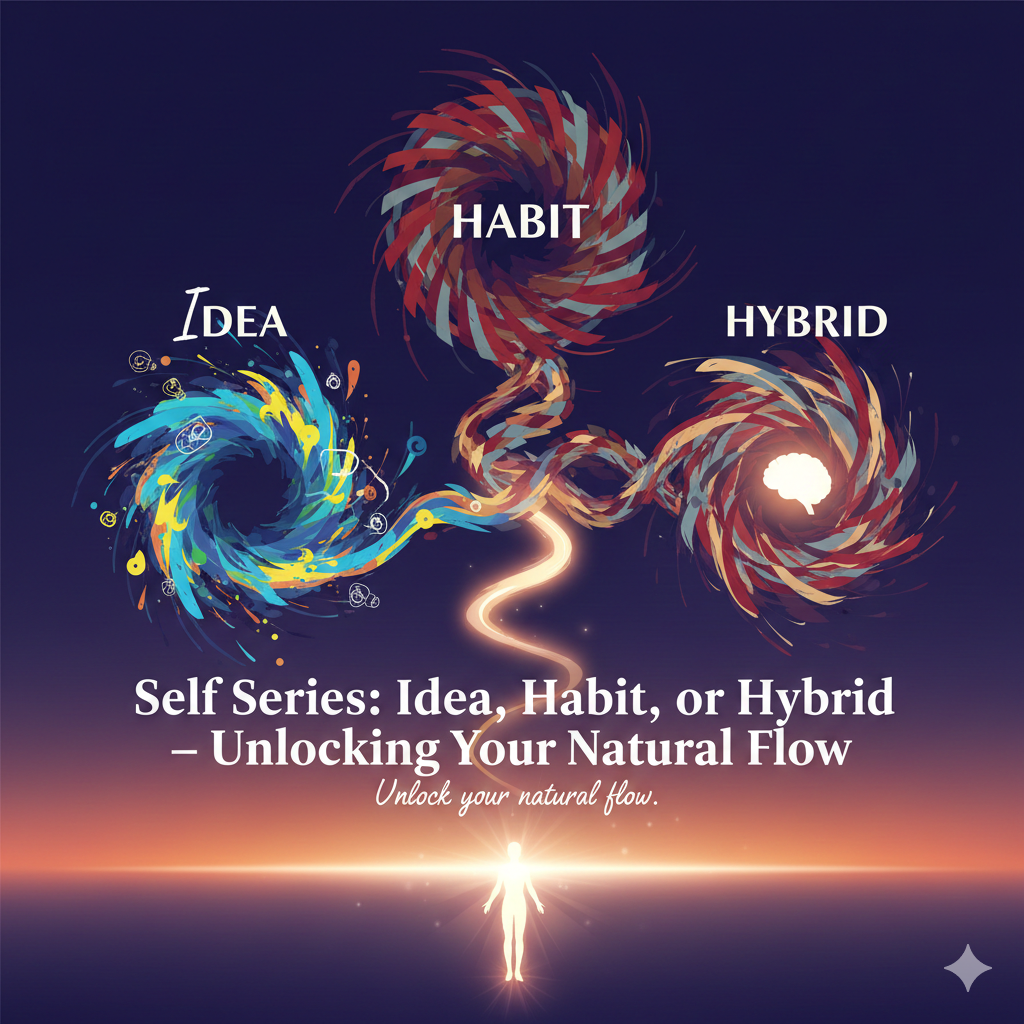
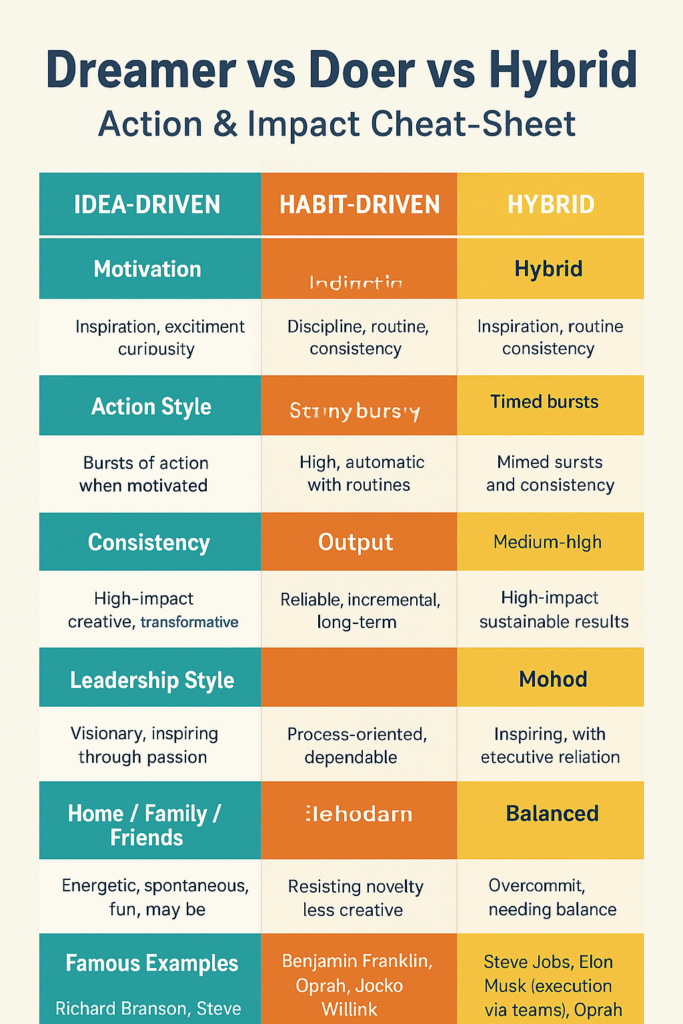
The Self Series: Idea, Habit, or Hybrid — Unlocking Your Natural Flow

Lately, I’ve been reflecting a lot on my own work style, habits, and how I interact with people. I realized something interesting: I’m Idea-driven in core, yet I instinctively expect structure and routine from others makes me Hybrid in execution and collaboration.

This got me thinking — surely, other people operate differently. Some thrive on consistency, while others, like me, thrive on inspiration. And then there are those who seem to blend both worlds.

So I decided to explore this further and write about Idea-Driven, Habit-Driven, and Hybrid personalities, and how these traits show up in leadership, family, friendships, and personal growth. My hope is that by sharing this, readers can reflect on their own style, understand how it affects their life, and learn where to leverage their strengths or be cautious.

1. Idea-Driven Personalities

Traits & Approach

  • Motivated by ideas, inspiration, and creativity
  • Thrive in bursts of energy and excitement
  • Flexible, open to surprises, resistant to rigid routines

Expectations

  • From self: Freedom to act on inspiration, explore, and create
  • From others: Structure, clarity, and routine from colleagues or team members

Perception by Others

  • At work: Visionary, creative, sometimes unpredictable
  • At home/friends: Energetic, inspiring, spontaneous; may sometimes seem inconsistent

Leadership Style

  • Big-picture visionaries
  • Inspire teams through passion and innovation
  • May struggle with routine management or follow-through

Parenting & Family

  • Encourages creativity and exploration
  • Values experiences over schedules
  • Can struggle with enforcing routines

Famous Idea-Driven Achievers

  • Richard Branson – leveraged bursts of inspiration for businesses, relied on structured teams for execution
  • Steve Jobs – visionary innovation, used others’ discipline to deliver results
  • Elon Musk – pursues high-impact projects, teams ensure operational follow-through

2. Habit-Driven Personalities

Traits & Approach

  • Motivated by discipline, routine, and consistency
  • Thrive on schedules and incremental progress
  • Prefer predictability and steady outcomes

Expectations

  • From self: Follow routines consistently, track progress
  • From others: Respect schedules, minimal disruption

Perception by Others

  • At work: Dependable, reliable, sometimes seen as rigid
  • At home/friends: Predictable and supportive; may seem less spontaneous

Leadership Style

  • Structured, organized, process-oriented
  • Excellent at maintaining stable, reliable teams
  • May resist rapid change or improvisation

Parenting & Family

  • Creates predictable routines and schedules
  • Focused on responsibility and consistency
  • May struggle to allow spontaneous fun

Famous Habit-Driven Achievers

  • Benjamin Franklin – mastery through strict daily routines
  • Oprah Winfrey – disciplined routines for reflection and growth
  • Jocko Willink – military precision, leadership through consistency

3. Hybrid Personalities (Idea + Habit-Driven)

Traits & Approach

  • Blend bursts of creativity with supporting structure
  • Flexible personally, but can design systems to execute ideas
  • Thrive on both inspiration and reliable processes

Expectations

  • From self: Space for creativity, but frameworks for follow-through
  • From others: Collaboration that balances innovation and execution

Perception by Others

  • At work: Visionary yet reliable; can bridge creative and operational teams
  • At home/friends: Energetic but dependable; inspires while maintaining stability

Leadership Style

  • Combines visionary thinking with execution discipline
  • Motivates through inspiration while ensuring consistent results
  • Excellent for roles requiring innovation plus operational success

Parenting & Family

  • Encourages creativity while maintaining routines
  • Balances exploration with responsibility
  • Inspires confidence and stability simultaneously

Famous Hybrid Achievers

  • Steve Jobs – bursts of vision combined with structured execution teams
  • Elon Musk – idea-driven vision with teams to operationalize projects
  • Oprah Winfrey – disciplined daily habits while creatively innovating content

4. How Personality Affects You and Others

  • Where it matters: Career, leadership, teamwork, personal growth
  • Where it doesn’t matter: Self-worth, external validation, passion and curiosity
  • How to leverage your type:
    • Idea-driven: Harness inspiration; partner with structure for follow-through
    • Habit-driven: Maintain consistency; allow small bursts of creativity
    • Hybrid: Use vision and structure together to maximize impact

Reflection Questions:

  • Which type are you — Idea, Habit, or Hybrid?
  • How does your personality show at work, with friends, and at home?
  • Where can you leverage your strengths and where should you be cautious?

💡 Key Takeaway:
No personality type is “better” — success comes from understanding your natural tendencies, leveraging your strengths, and managing blind spots. Idea-driven, habit-driven, or hybrid — each can excel when applied thoughtfully.

💡 The Self-Series: Mind, Metaphor, & Meaning – 🎭 Masks We Wear

A Weekly Series on Who You Are Beneath the Noise

Welcome to Reads With B’s new flagship series! The Self-Series is your journey into the subtle, powerful forces that shape how you think, feel, and show up in the world.

Each week, we’ll explore one layer of your inner world: from personality traits to emotional patterns, from cultural conditioning to subconscious drives. This isn’t about textbook psychology—it’s about you, your lived experience, and your search for clarity.

We begin with something we all do, but rarely examine:


🎭 Masks We Wear: Why We Adapt, What We Hide, and How to Stay True

We all wear masks. Not to deceive, but to belong, to protect what’s tender, and to move through the worlds we live in—home, work, and friendships—with a little more safety.

The trick isn’t to rip the mask off. It’s to know which mask you’re wearing, why you chose it, and whether it still serves you.

🪞 What a “Mask” Really Is

Your daily masks are not about deceit; they are essential social tools:

  • Adaptive Persona: The version of you that perfectly fits the room—polished at work, playful with friends, softer at home.
  • Protective Layer: A necessary buffer that shields your core self from judgment, conflict, or emotional overload.
  • Communication Shortcut: It simplifies how others read you (e.g., confident, calm, caring), even when you’re feeling something more complex underneath.

“We all wear masks, and the time comes when we cannot remove them without removing some of our own skin.” — André Berthiaume

🏠 vs. 💼 Home and Work Masks: The Spillover Effect

The personas you wear in one environment rarely stay put. Understanding this contrast is key to balance:

EffectDescriptionPractical Example
SpilloverA mask worn in one area lingers in the next.The “professional mask” of cool composure makes you seem distant or rigid with family.
CompensationYou overcorrect in the opposite environment.After being diplomatic all day, you are unnecessarily blunt and unfiltered at home.
Energy DrainSwitching masks too often feels exhausting, leaving little energy for genuine self-expression.

The Opportunity: Conscious awareness of this contrast allows you to borrow strengths from one mask to enrich the other (e.g., bringing compassionate care from home life into leadership at work).

👤 The Conditioning: Common Masks Worn and Why

While everyone is unique, social conditioning often pushes us into specific personas:

💪 The Strength Mask (Often Worn by Men)

  • Expectation: To be competent, unfazed, and solutions-first.
  • Outside Words: “Don’t worry, I’ve got this.”
  • Inside Feeling: “I’m overwhelmed, but I can’t show weakness.”

🌸 The Care Mask (Often Worn by Women)

  • Expectation: To be supportive, empathetic, and the relational glue.
  • Outside Words: “It’s okay, I’ll take care of it.”
  • Inside Feeling: “I wish someone would prioritize me for once.”

🧘 The Neutral Mask (Worn by All)

  • Expectation: To be calm, composed, and emotionally steady.
  • Outside Words: “I’m fine.”
  • Inside Feeling: “I’m not fine, but I don’t want to burden anyone.”

🔍 Questions to Protect Your Inner Self

Ask yourself these questions to turn a passive defense into an active choice:

  1. ❓ Am I choosing this mask, or is it choosing me?
  2. 🛡️ What am I protecting by wearing this mask?
  3. ⚡ Does this mask drain me or energize me?
  4. 👀 Who sees me without the mask?
  5. 🔄 Am I wearing the same mask everywhere?

“The privilege of a lifetime is to become who you truly are.” — Carl Jung

⚖️ Balancing Authenticity and Masking

The goal is not zero masking, but conscious masking.

  • Authenticity without awareness can feel raw, unfiltered, and even unsafe in certain contexts.
  • Masking without authenticity leads to exhaustion, disconnection, and resentment.

The Balance Point:

  • Use masks as tools—to navigate challenging environments.
  • Keep authenticity as your anchor—to stay aligned with your core values.
  • Practical Tip: Aim for 70% authenticity and 30% adaptive masking. Enough to be real, but flexible enough to thrive.

✅ Quick Self-Check: Which One Are You?

TypeCharacteristicsKey Takeaway
Always MaskedRarely show vulnerability; feel drained after most interactions; worry about being “found out.”Your shield is becoming a cage.
Mostly AuthenticSpeak your truth often; feel energized by relationships; sometimes clash with conforming environments.Your openness is your strength, but check your audience.
The BalancerYou adapt when needed but return to your core self often; feel both safe and connected.You consciously choose when to mask and when to drop it.

🧩 Closing Thought

Masks aren’t the enemy. They’re skills—until they become shields you can’t set down. You don’t need to be “fully authentic” everywhere, all at once.

You just need to be deliberately yourself a little more often, in the rooms that matter most.

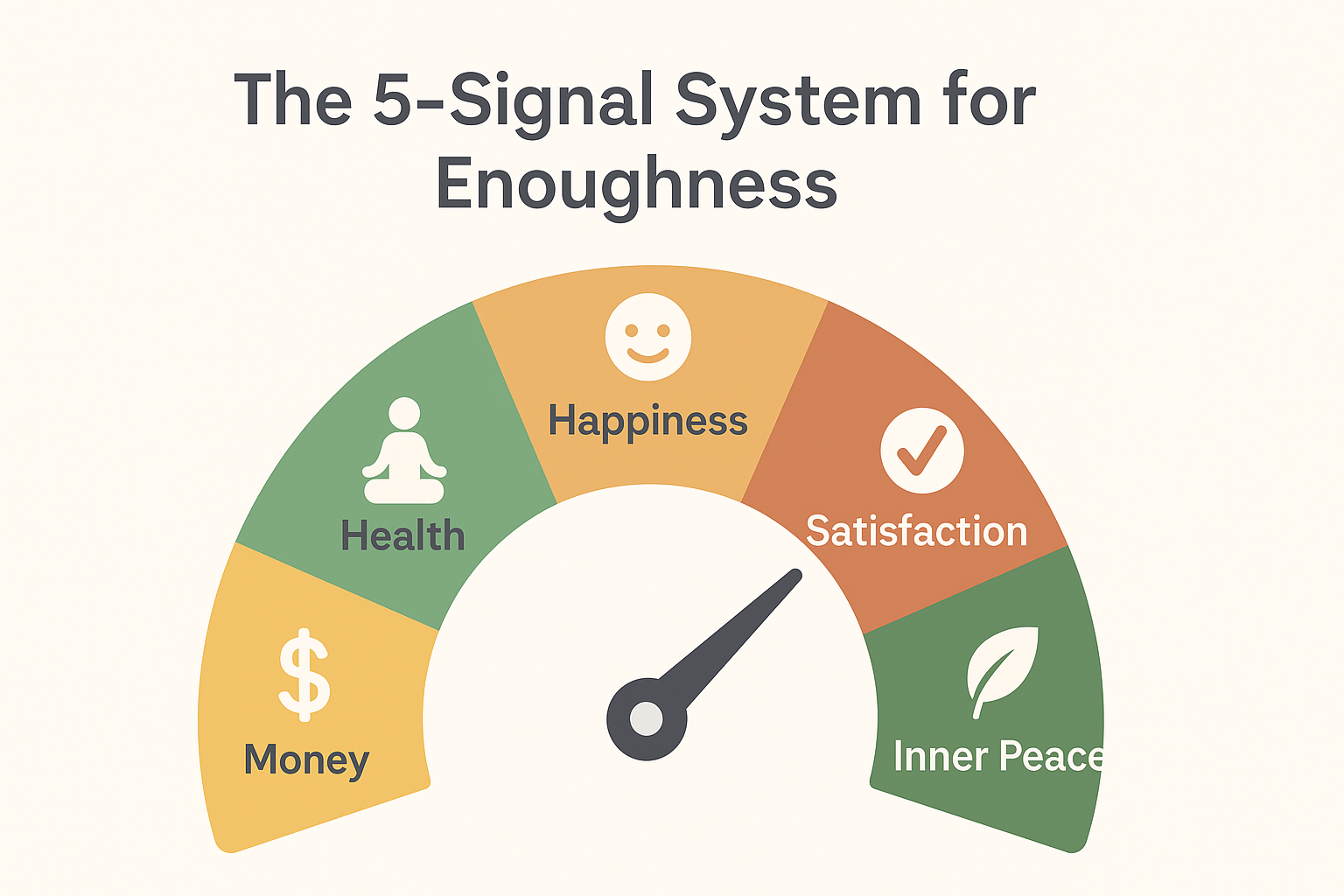
The 5-Signal System for Enoughness

We often chase more — more success, more money, more comfort — without checking if we’re already living with enoughness. This model introduces five core life signals that help you reflect on whether your life feels safe, meaningful, joyful, and aligned.

Most importantly, it clarifies why Satisfaction is separate from Money, Health, and Happiness, and how ambition can co-exist with a grounded sense of enoughness.

But very rarely do we pause and ask ourselves:

“Do I already have enough?”

The 5-Signal System for Enoughness is a gentle, practical tool to help you reflect on the areas of life that truly matter.
Not as an external checklist, but as an inner dashboard.

🌟 1. Money — The Security Signal

Money reflects stability, not status. It’s about feeling protected, having choices, and living without constant fear.

What Money “Enoughness” Means

  • Your essentials are covered without strain
  • You can handle an unexpected expense
  • You spend consciously—not emotionally

Key Question

“Do I feel financially safe and free, not necessarily rich?”


🧘‍♀️ 2. Health — The Energy Signal

Health determines the quality of your days. When your body supports you, life feels lighter.

What Health “Enoughness” Means

  • You wake up with stable energy
  • You can perform daily activities without discomfort
  • Your body feels like a partner, not a limitation

Key Question

“Is my body supporting the life I want to live?”


😊 3. Happiness — The Emotional Signal

Happiness is your emotional tone. It’s not about being happy always — but feeling joy naturally.

What Happiness “Enoughness” Means

  • You have small, frequent moments of joy
  • You can bounce back from emotional dips
  • Your mind doesn’t feel heavy every day

Key Question

“Do I experience moments of joy or ease in a normal week?”


⭐ 4. Satisfaction — The Alignment Signal

Satisfaction is not the same as happiness or money or health. It is the long-term sense of fulfillment.

It measures whether your life reflects your values, identity, and purpose — not anyone else’s.

Why Satisfaction is Separate

  • You can be happy today but unsatisfied with your life
  • You can be wealthy but feel empty
  • You can be healthy but feel you’re not living your potential

Satisfaction equals alignment — the feeling that you’re on your true path.

What Satisfaction “Enoughness” Means

  • Your efforts feel meaningful
  • Your choices reflect your values
  • You feel you’re progressing in the right direction

Key Question

“Is the way I’m living aligned with what truly matters to me?”


🍃 5. Inner Peace — The Steadiness Signal

Inner Peace is emotional grounding. It’s the feeling that your mind is not constantly fighting you.

What Inner Peace “Enoughness” Means

  • Your thoughts don’t overwhelm you
  • You recover emotionally without staying stuck
  • You can handle uncertainty without spiraling

Key Question

“Is my inner world calm enough for me to think clearly and live gently?”


⚖️ Balancing Enoughness and Ambition

Here is the truth many people misunderstand:

Ambition is not the opposite of enoughness — stagnation is.

You can feel enough and still desire growth.
You can be grateful and still aspire.

Unhealthy Ambition

  • “I’ll be enough when I achieve more.”
  • “I must constantly prove myself.”
  • “My worth depends on performance.”

Healthy, Grounded Ambition

  • “I am already enough — and I choose to grow.”
  • “My progress is meaningful, not pressured.”
  • “Ambition adds to my life, not replaces peace.”

Ambition belongs within the Satisfaction signal.
True satisfaction often includes purposeful growth.


✨ The 5-Signal Self-Check

Rate each signal from 1 to 5:

  • 1 — Very low
  • 2 — Needs improvement
  • 3 — Acceptable
  • 4 — Strong
  • 5 — Excellent
Life Signal12345
💰 Money
🧘‍♀️ Health
😊 Happiness
🎯 Satisfaction
🌿 Inner Peace

Interpretation:

  • 15 or above → You are living with strong enoughness
  • 10–14 → You have a stable foundation with room to deepen
  • Below 10 → You may be craving balance, alignment, or stability

🌱 Final Reflection

Enoughness grounds you. Ambition moves you.
A good life contains both.

When your five signals are mostly green — safety, energy, joy, alignment, and peace — you live from a place of stability. From there, ambition stops being pressure and becomes expansion.

You don’t stop growing.
You just stop growing from fear.

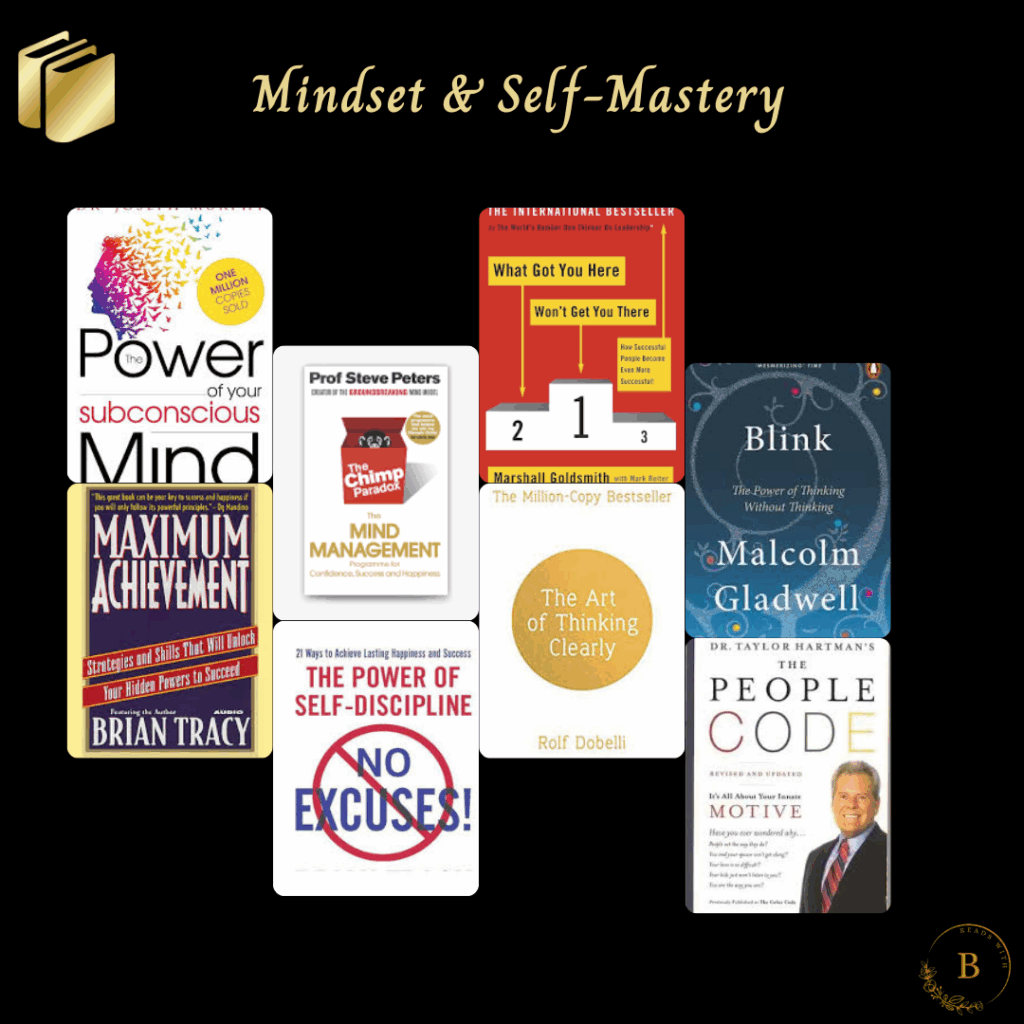
🌟 40 Years. 📚 40 Books. 💡🌱❤️ INFINITE LESSONS

As I step into a new decade today, I want to celebrate this milestone with something deeply meaningful to me — BOOKS 📖✨

Of many books I have read, each of these 40 books has been a companion on my journey — helping me:
Shift my mindset 🧠💭
Manage time wisely ⏳🗂️
Heal my Mental Health 🫀🛋️
Awaken Spiritually 🕊️🌌
Make Better Decisions 🎯🤔
and most importantly, LISTEN TO MY INNER VOICE AMIDST THE EXTERNAL NOISE 🔇🧘‍♀️

Here’s my list of 40 books categorized under the following themes:
– Mindset & Self-Mastery 🧠✨
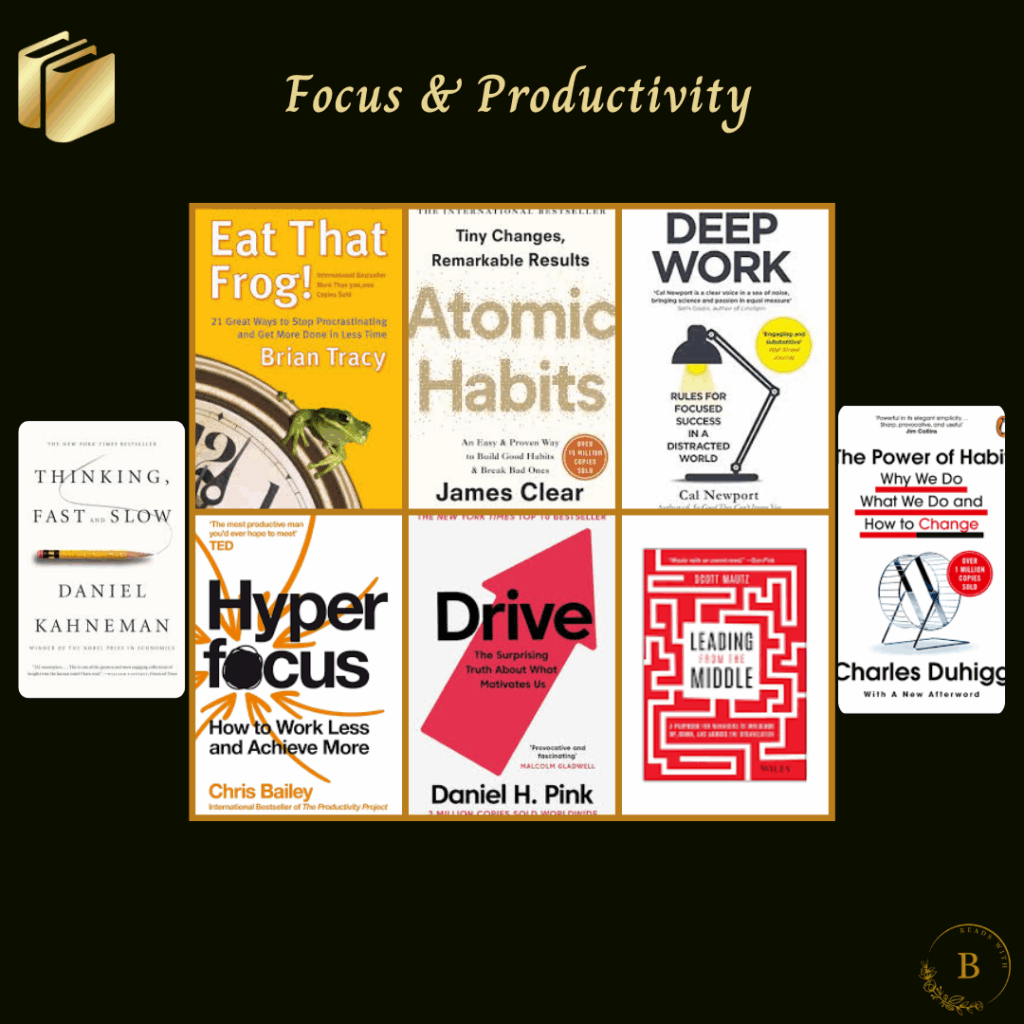
– Productivity & Focus ⏱️📌
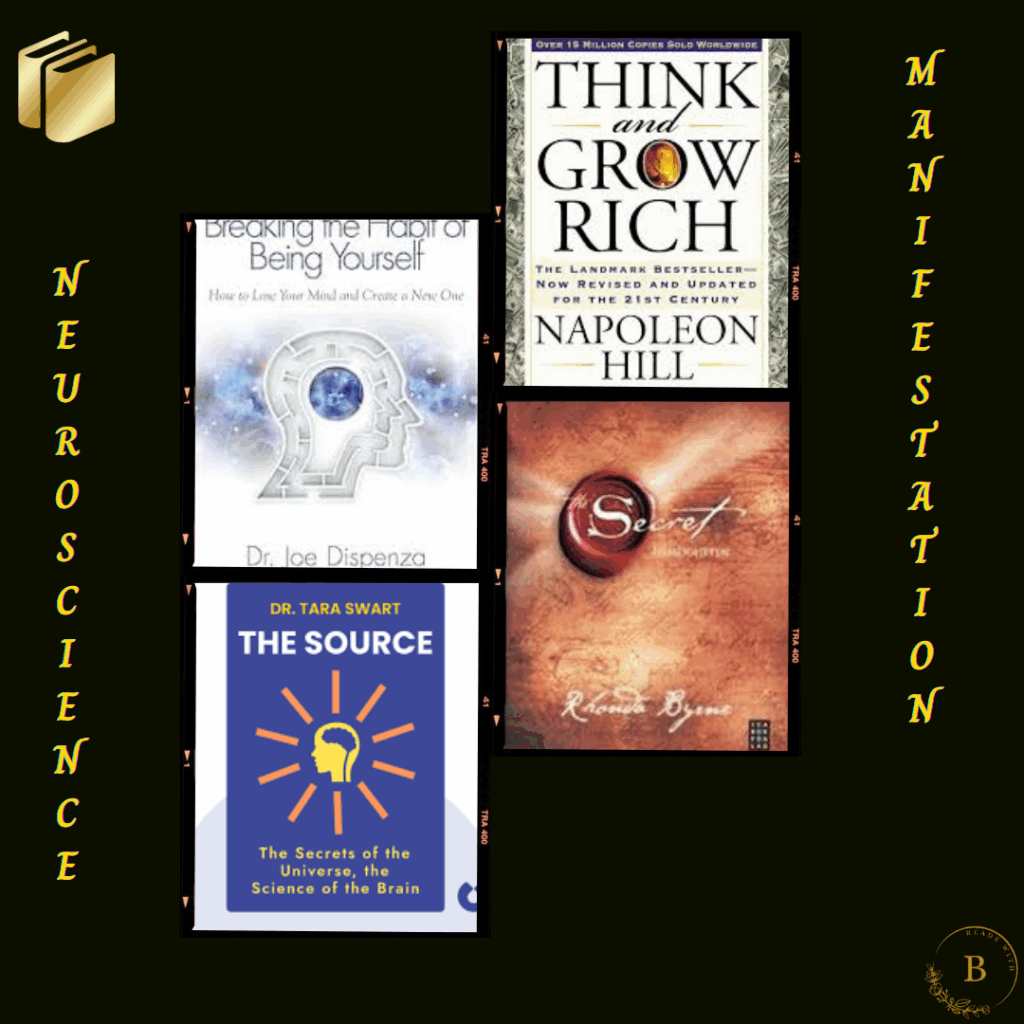
– Neuroscience & Manifestation 🧬💡
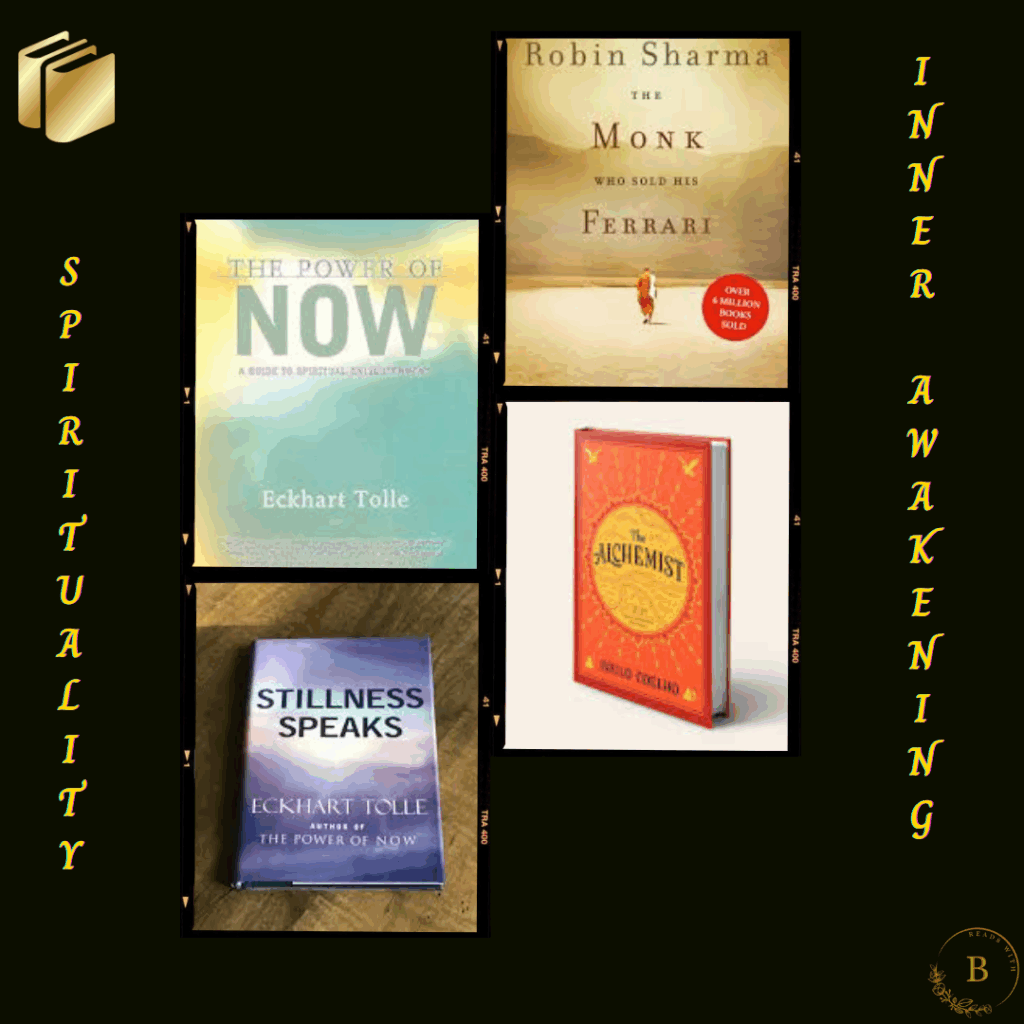
– Spirituality & Inner Awakening 🕊️🌌
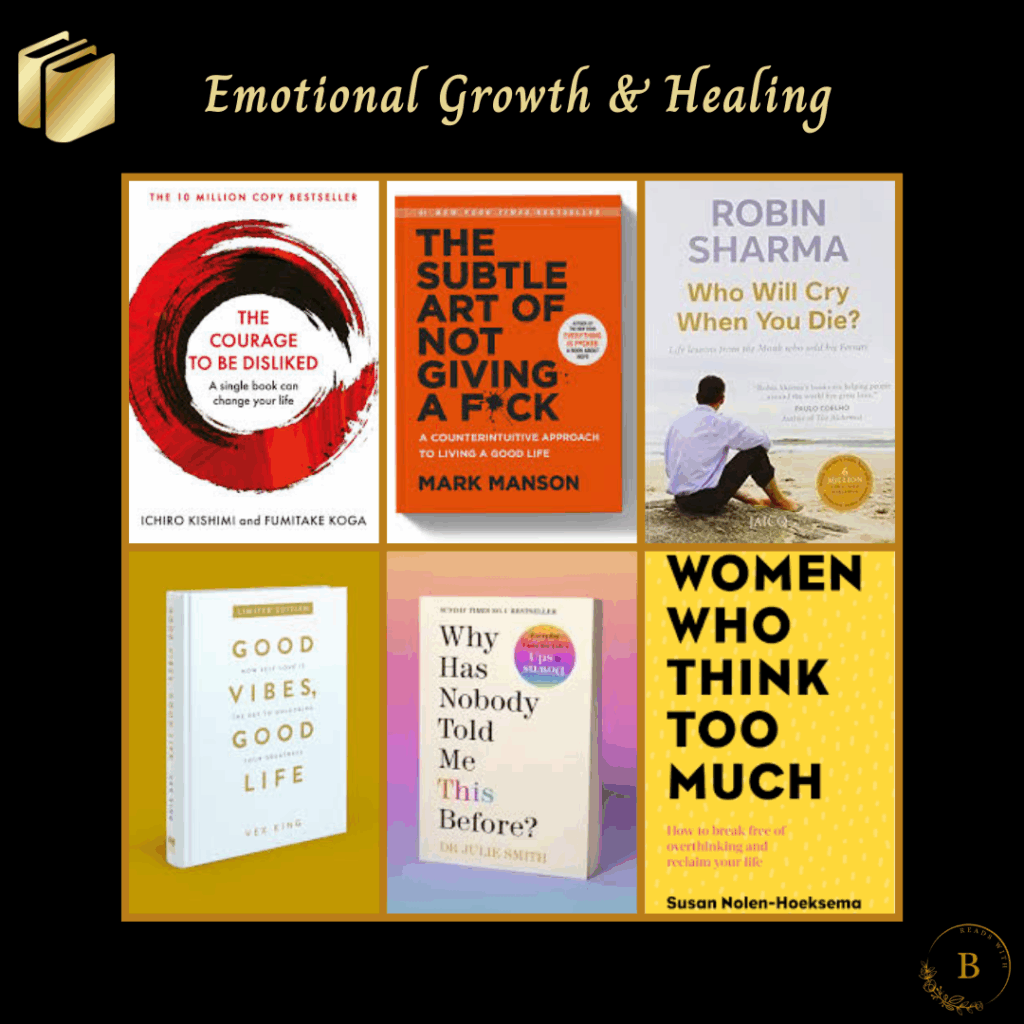
– Emotional Growth & Healing ❤️🩹
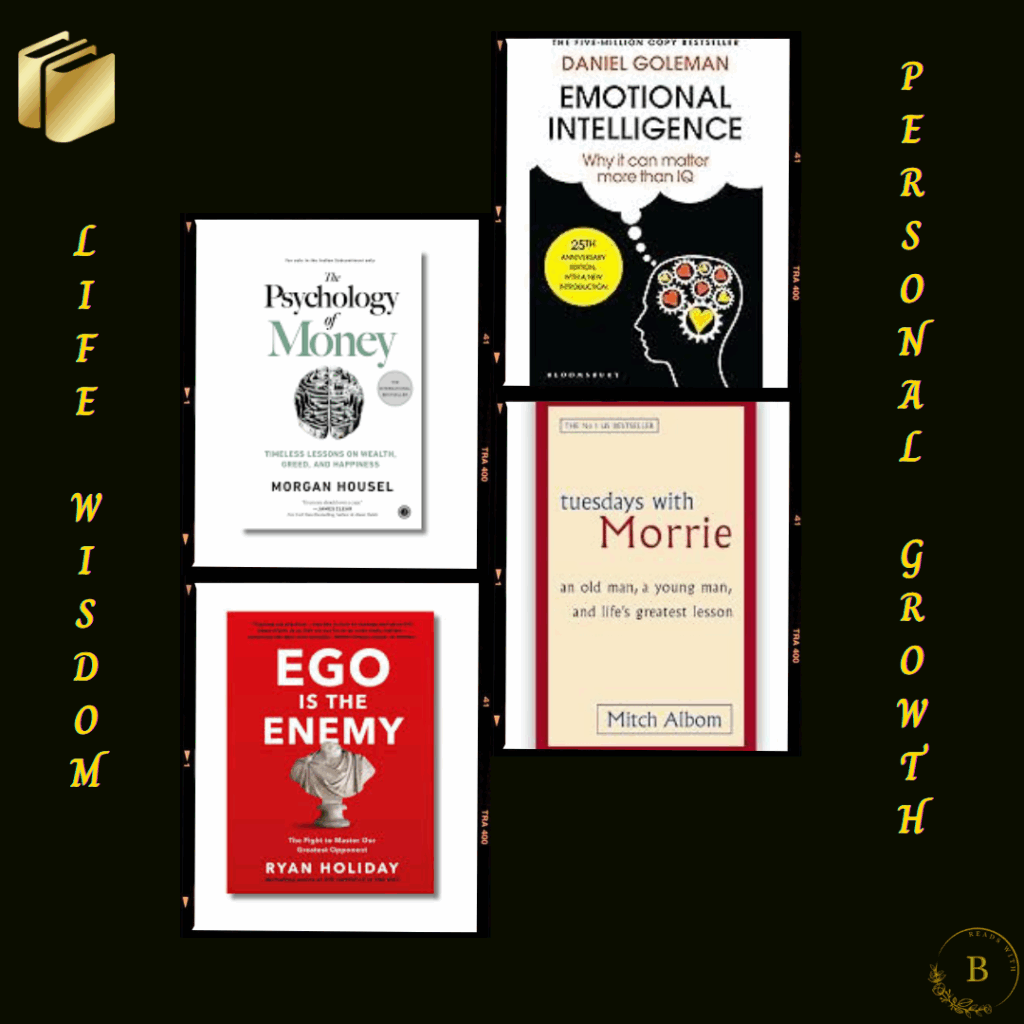
– Personal Growth & Life Wisdom 🌱📚
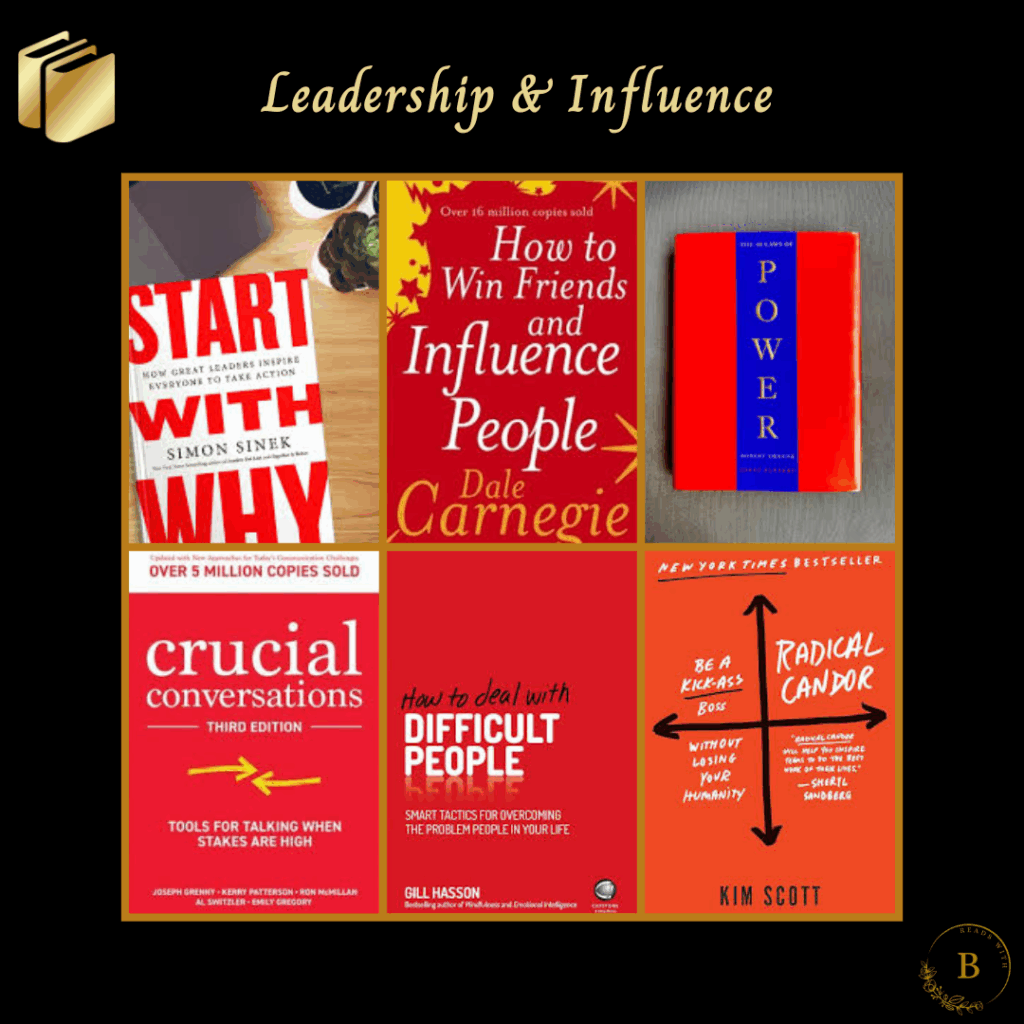
– Leadership & Influence 👩‍💼🌟


📚 Each of these books has left a mark on me. Together, they’ve been my mentors, mirrors, and motivators.
Here’s to more wisdom, more courage, and more pages turned in the years ahead. 🌿✨

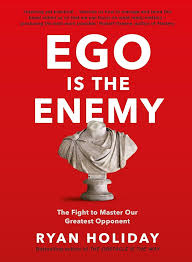
Ego is the Enemy by Ryan Holiday

Ryan Holiday explores how ego – our inflated sense of self – is the biggest obstacle to personal and professional success. Divided into three sections (Aspire, Success, and Failure), the book illustrates how ego sabotages us at different stages of life and provides actionable strategies to control it.

May be you’re young and brimming with ambition or strugglingg…

May be you’ve made lot of money, accomplished enough to last a lifetime…

May be you’re stunned to find out how empty it is at the top…

Maybe you’re charged with leading others through a crisis…

Maybe you just got fired or hit rock bottom…

Wherever you are, whatever you are doing, your worst enemy already lives inside you: your EGO.

“Not me”, you think… “No one would ever call me an egomaniac.”.  Perhaps you’ve always thought of yourself as a pretty balanced person.  But for people with ambitious, talents, drives and potential to fulfill, ego comes with the territory.  Precisely what makes us so promising as Thinkers, Doers, Creatives and Entrepreneurs, what drives us to the top of those fields, makes us vulnerable to this darker side of the psyche.

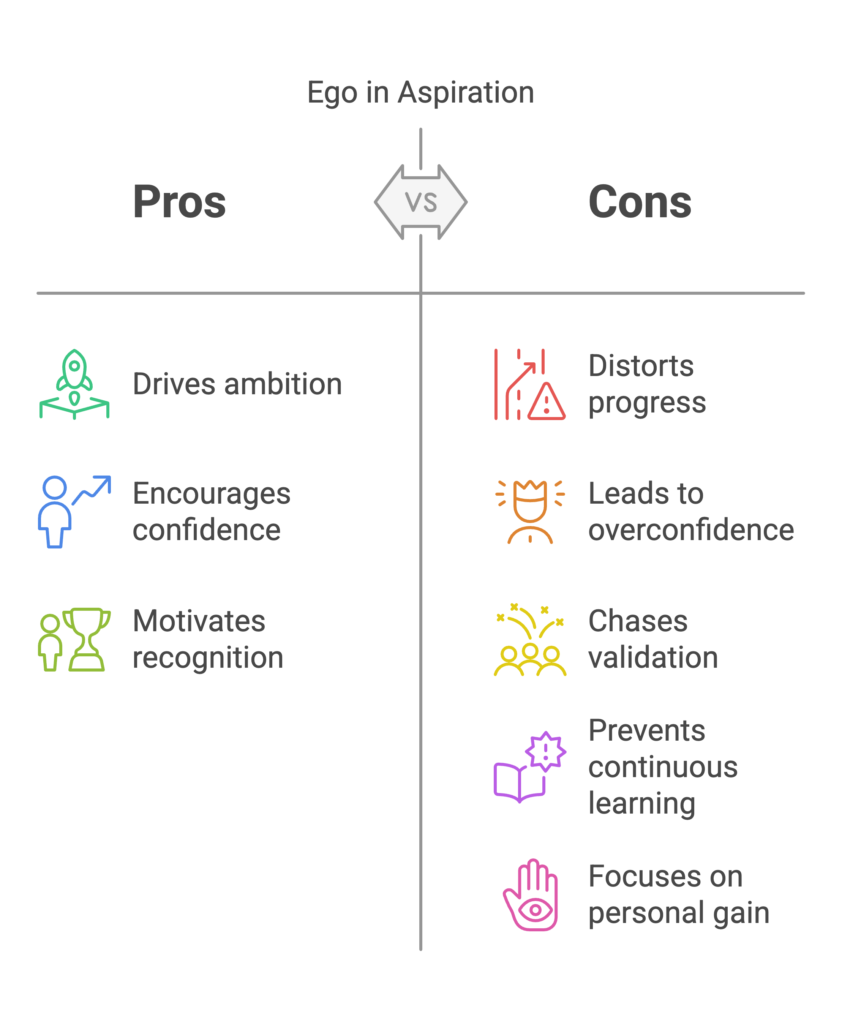
1. Aspire – The Dangers of Early Ego

Aspiration is essential, but ego distorts it, making us seek validation instead of real progress.

Key Lessons:

  • Talk Less, Do More: Overconfidence leads to talking about goals instead of achieving them.
  • Be a Lifelong Student: Learning and humility go hand in hand.
  • Work for a Cause, Not Applause: Pursue meaningful work rather than chasing status.

Key Quotes:

Those who know do not speak. Those who speak do not know. – Lao Tzu

Impressing people is different from being truly impressive.

Ego Trigger Points in Aspiration

ChapterEgo Trigger Points
The Ego Is the EnemyBelieving success is guaranteed due to talent or intelligence.
To Be or To Do?Prioritizing recognition over meaningful work.
Become a StudentThinking you already know everything and refusing to learn.
Don’t Be PassionateMistaking raw enthusiasm for competence and execution.
Follow the Canvas StrategyExpecting immediate rewards instead of serving others first.
Restrain YourselfActing impulsively and letting emotions dictate decisions.
Get Out of Your Own HeadOverthinking and becoming paralyzed by self-importance.
The Danger of Early PrideBecoming complacent or arrogant after small wins.
Work, Work, WorkSeeking validation rather than focusing on consistent effort.
For Everything That Comes Next, Ego Is the EnemyThinking success makes you immune to failure.

2. Success – Ego Can Destroy What You Build

Once we achieve success, ego tempts us to believe we are special, making us complacent and resistant to feedback.

Key Lessons:

  • Stay a Student: The best leaders continue to learn despite their achievements.
  • Detach from the Need for Recognition: True success is about contribution, not applause.
  • Don’t Believe Your Own Hype: Many successful people fail because they overestimate their abilities.

Key Quotes:

Ego is the enemy of what you want and of what you have.

A person who thinks they have arrived has already begun their departure.

Ego Trigger Points in Success

ChapterEgo Trigger Points
Thinking success makes you immune to failure.Believing you’ve “made it” and no longer need to learn.
Don’t Tell Yourself a StoryCreating a self-serving narrative about your success.
What’s Important to You?Chasing external recognition over true priorities.
Entitlement, Control, and ParanoiaFeeling owed success, trying to control everything, or fearing threats.
Managing YourselfLetting success inflate your ego and lower your self-awareness.
Beware the Disease of MeThinking you are more important than the team.
Meditate on the ImmensityFocusing only on personal success rather than the bigger picture.

3. Failure – Ego Makes Setbacks Worse

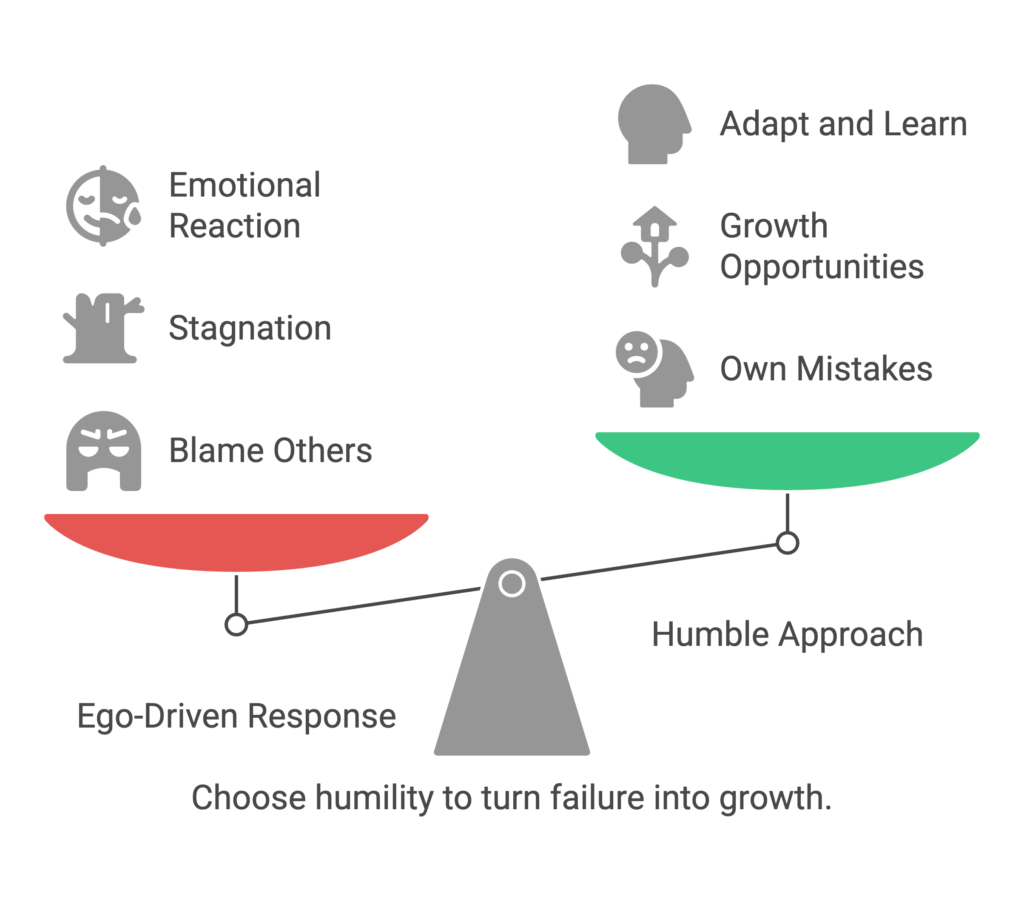
Failure is inevitable, but ego turns it into a crisis instead of a learning opportunity.

Key Lessons:

  • Own Your Mistakes: Take responsibility instead of blaming others.
  • Use Setbacks as Fuel: Many successful people grew because of their failures.
  • Stay Humble and Keep Moving: Don’t let failure define you.

Key Quotes:

Almost always, your roadblock is yourself.

The ability to learn from failure is a skill that must be developed.

Ego Trigger Points in Failure

ChapterEgo Trigger Points
Alive Time or Dead Time?Wasting time wallowing in failure instead of learning.
The Effort Is EnoughFeeling entitled to specific outcomes rather than valuing the process.
Fight Club MomentsAvoiding necessary hardship and self-reflection.
Draw the LineCompromising integrity for short-term gain.
Maintain Your Own ScorecardMeasuring success by external validation instead of internal standards.
Always LoveHolding onto resentment or bitterness after failure.
For Everything That Comes Next, Ego Is Still the EnemyLetting failure define you or make you give up.

Conclusion – How to Keep Ego in Check

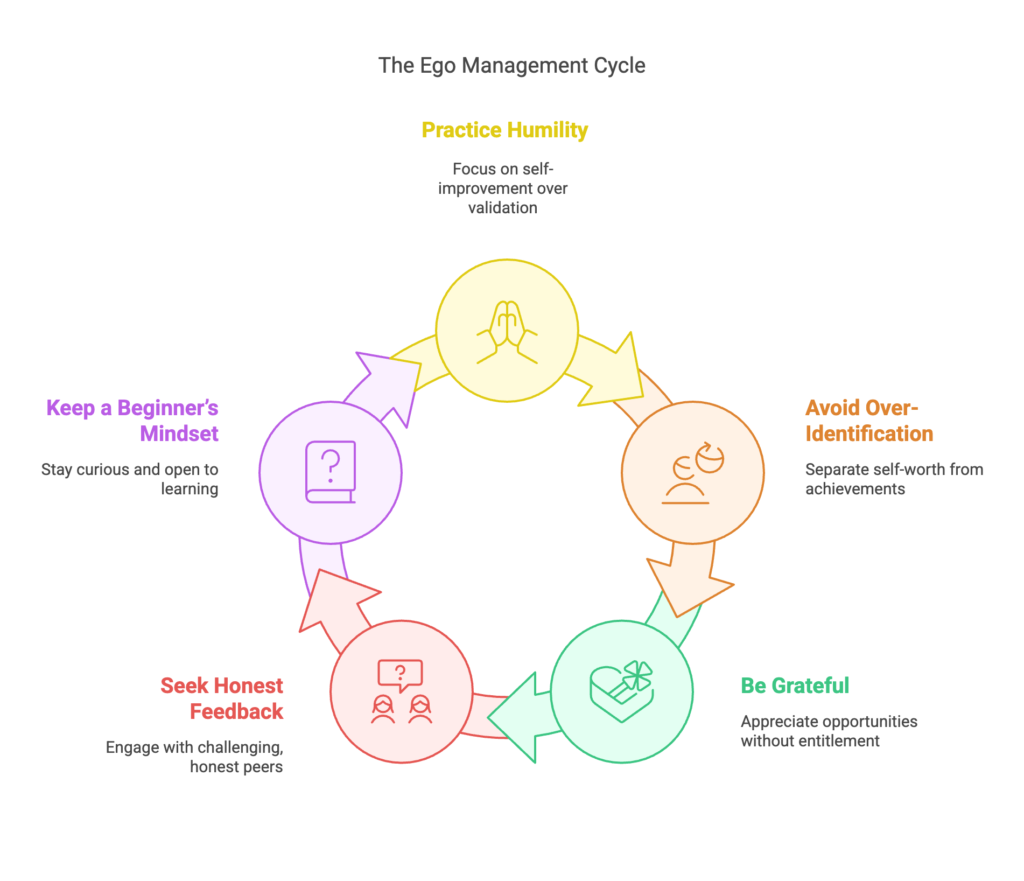
  • Practice Humility Daily: Focus on continuous improvement.
  • Avoid Over-Identification with Success or Failure: They don’t define your worth.
  • Be Grateful, Not Entitled: Appreciate opportunities instead of expecting them.

Final Thought:

Ego is a lifelong battle. Whether aspiring, succeeding, or failing, staying humble, adaptable, and disciplined leads to true fulfillment.


Attachment

To download the summary for offline read, please click here

« Older posts

© 2026 readswithb.com

Theme by Anders NorénUp ↑