Tag: Self Growth

The Power of your Subconscious Mind by Dr. Joseph Murphy

Core Theme: Your mind is a “treasure house.” By changing your habitual thinking and mental imagery, you can literally rewire your destiny.

🌟 The Big Idea

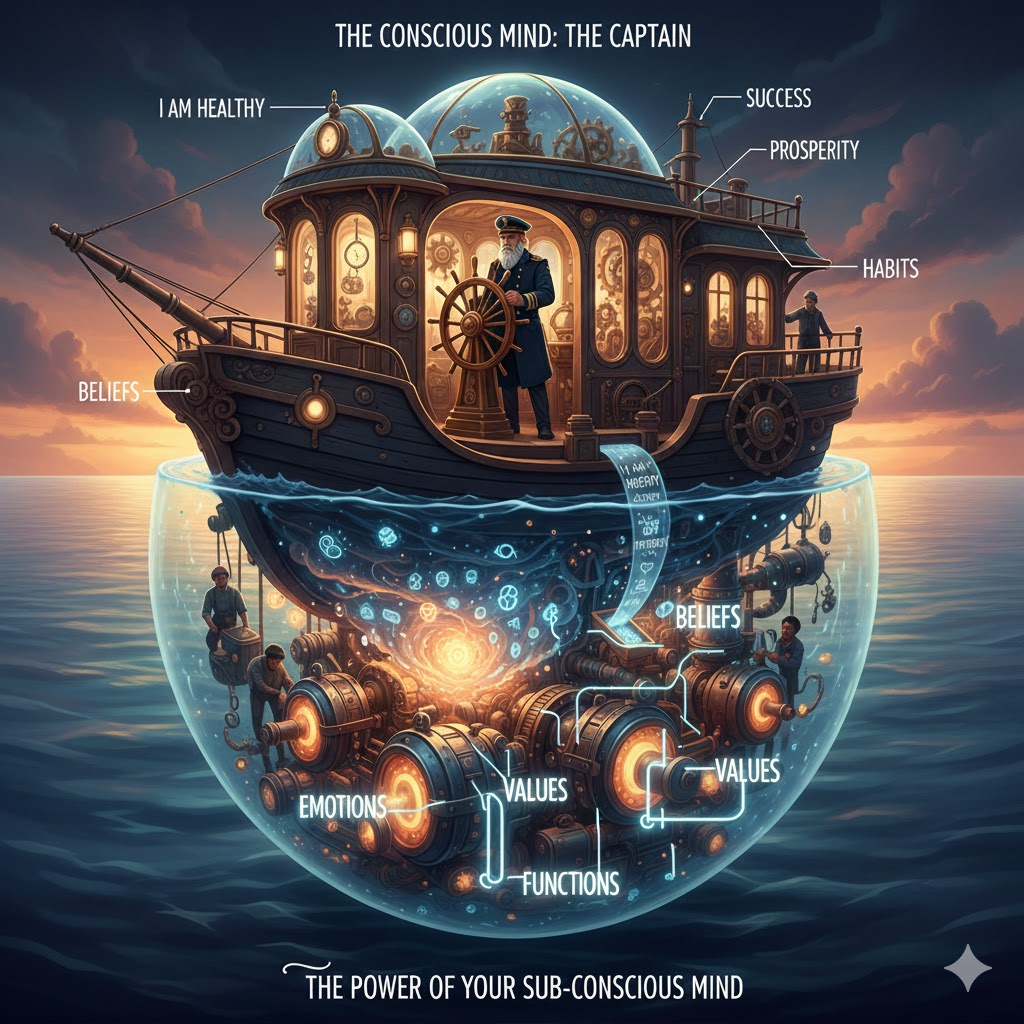
Joseph Murphy posits that we have one mind with two distinct functional parts: the Conscious (Objective) and the Subconscious (Subjective).

  • The Conscious Mind is the captain of the ship; it reasons and chooses.
  • The Subconscious Mind is the engine room; it doesn’t argue, it simply obeys the orders (thoughts) sent by the conscious mind.
Chapter 1: The Treasure House Within You

Murphy argues that most people are “magnetized”—they believe they are born to succeed. Others are “demagnetized”—filled with fear and doubt.

  • Key Concept: The Master Secret is the discovery of the subconscious mind.
  • Takeaway: Stop looking for “luck” or external help. The power to heal your body and solve your finances is already inside you.

Chapter 2: How Your Own Mind Works

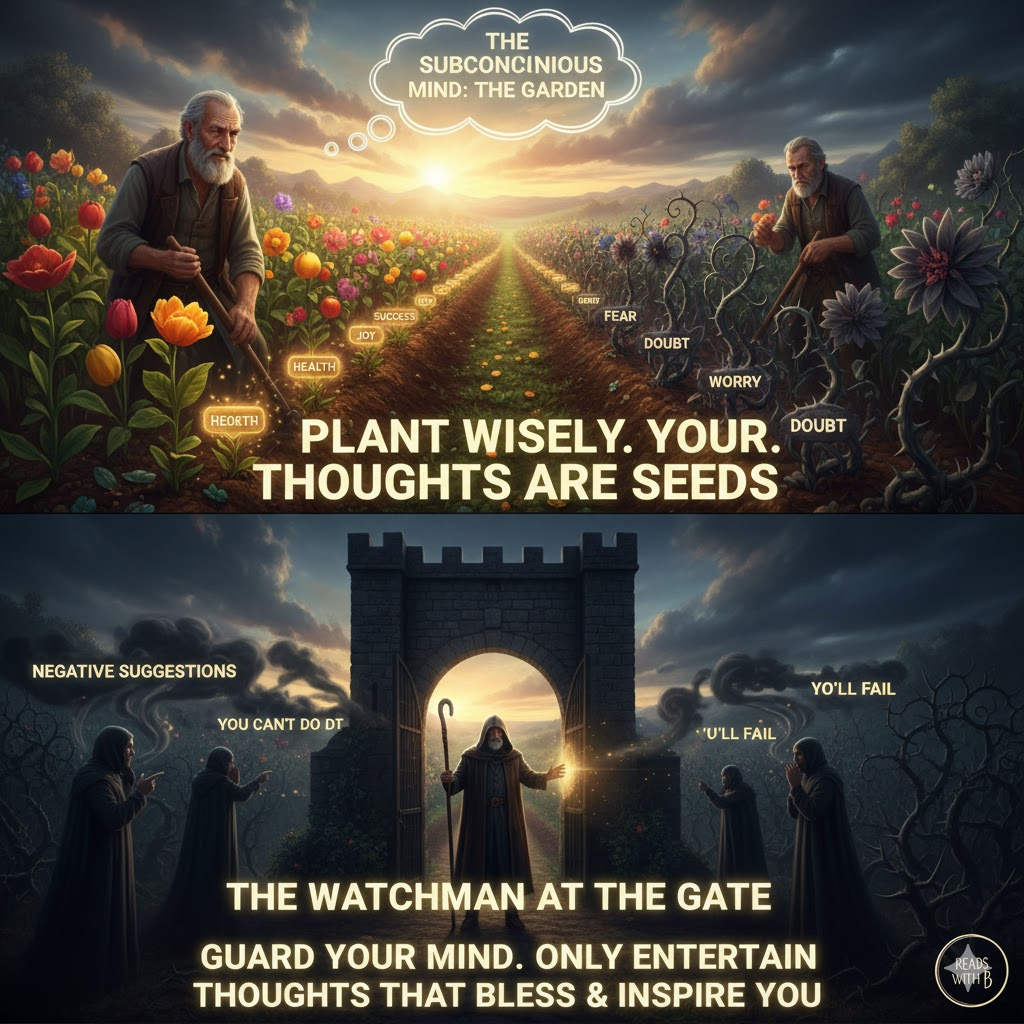
Think of your subconscious as a piece of land. If you plant seeds of fear, it doesn’t care; it will grow fear. If you plant seeds of success, it grows success.

  • Key Concept: Heterosuggestion. This is the power of other people’s words. You must learn to reject negative suggestions from others.
  • Takeaway: You are the “Watchman at the Gate.” Only let thoughts that bless and inspire enter your mind.
Chapter 3: The Miracle-Working Power of Your Subconscious

Your subconscious controls your heartbeat and breathing 24/7. It knows every cell in your body.

  • Key Concept: Subjective Logic. Your subconscious doesn’t need proof; it takes your word for it.
  • Takeaway: By telling your subconscious “I am healthy,” you provide the blueprint it needs to repair your physical body.

Chapter 4 & 5: Mental Healings (Ancient & Modern)

Whether it’s a holy relic or a modern doctor, the “healing” happens because the patient believed it would happen.

  • Key Concept: Absent Treatment. You can influence the health of others by projecting thoughts of health toward them.
  • Takeaway: It doesn’t matter what you believe in; it is the act of believing that triggers the subconscious healing mechanism.

Chapter 6: Practical Techniques in Mental Healing

Murphy outlines the “Sleep Technique.” Just before you drift off, your conscious mind is quiet. This is the best time to “whisper” your goals to your subconscious.

  • Key Concept: The Baudoin Technique. Reducing your desire to a short, phrase like “It is finished” and repeating it like a lullaby.
  • Takeaway: Don’t use willpower. Use imagination.

Chapter 7 & 8: The “Lifeward” Flow and Getting Results

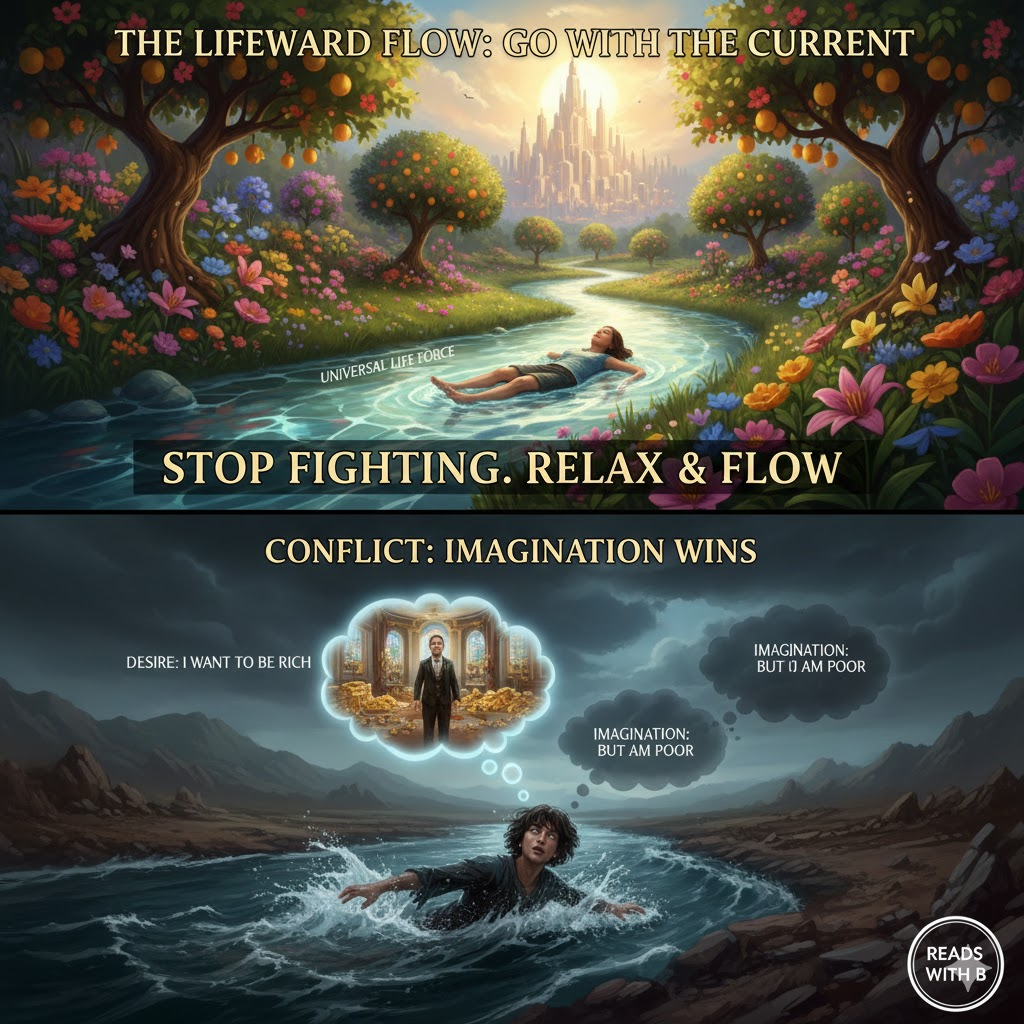
When you are sick or failing, you are fighting against the natural “Lifeward” flow of the universe.

  • Key Concept: Conflict of Desire and Imagination. If you want to be rich (Desire) but imagine you are poor (Imagination), imagination always wins.
  • Takeaway: Stop trying to force things to happen. Relax and see the end result as already achieved.
Chapter 9 & 10: Wealth and Your Right to be Rich

Wealth is simply a subconscious conviction. If you criticize rich people, you are pushing wealth away from you.

  • Key Concept: The Wealth Seed. Repeat the word “Wealth” slowly for 5 minutes before bed.
  • Takeaway: Money is a symbol. It should circulate freely in your life like blood in your body.

Chapter 11 & 12: Success and Science

Success isn’t just money; it’s peace of mind. Great scientists like Tesla used their subconscious to “see” their inventions before they built them.

  • Key Concept: The Three Steps to Success. 1. Find the thing you love to do. 2. Specialize in it. 3. Make sure your goal isn’t just for you, but for the world.
  • Takeaway: If you have a problem, ask your subconscious for the answer before bed.

Chapter 13: The Wonders of Sleep

Elaboration: You spend 1/3 of your life asleep. During this time, your subconscious is processing your day and preparing your tomorrow.

  • Key Concept: Sleep Guidance. If you have a tough decision, say “The subconscious intelligence is guiding me.”
  • Takeaway: Never go to sleep thinking about your problems; go to sleep thinking about the solutions.

Chapter 14 & 15: Marriage and Happiness

Relationships fail when people try to change their partner instead of their own mental attitude.

  • Key Concept: The Happiness Habit. Happiness is a choice you make every morning.
  • Takeaway: To attract the right partner, list the qualities you want and dwell on them. You will attract what you radiate.

Chapter 16 & 17: Human Relations and Forgiveness

You cannot be happy if you hold a grudge. Resentment acts as a “blockage” to your own success.

  • Key Concept: The Mental Mirror. How you feel about others is a reflection of how you feel about yourself.
  • Takeaway: Forgiving someone doesn’t mean you like them; it means you are letting go of the negative energy for your own sake.

Chapter 18 & 19: Removing Blocks and Fear

Fear is just a “thought in your mind.” It has no power except what you give it.

  • Key Concept: Substitution. You cannot “fight” a bad habit. You must replace it with a better one.
  • Takeaway: If you are afraid of something, do it. The subconscious will back you up once you take the first step.

Chapter 20: How to Stay Young in Spirit Forever

Elaboration: Age is not the passage of years, but the dawn of wisdom.

  • Key Concept: Mental Vitality. Keep your mind open to new ideas, and you will never grow “old.”
  • Takeaway: Retirement is a new opportunity to use the wisdom you’ve gained over the years.

💡 Key Takeaways:

  1. The Law of Belief: The law of life is not the law of “things,” but the law of belief. Your subconscious responds to what you honestly believe is true.
  2. The “Captain” Analogy: Your conscious mind is the captain. If the captain gives wrong orders (negative thoughts), the ship (your life) goes off course. You must give the order: “I am safe, healthy, and prosperous.”
  3. Visualization: If you want something, create a mental movie of it. Feel the reality of the scene in your mind until your subconscious accepts it as a fact.
  4. The Power of Forgiveness: Holding onto resentment is like taking poison and waiting for the other person to die. To heal your life, you must release others mentally.


💬 Key Quotes to Live By

“Busy your mind with the concepts of harmony, health, peace, and goodwill, and wonders will happen in your life.”

“The feeling of wealth produces wealth; keep this in mind at all times.”

“You are the captain of your soul and the master of your fate. Remember, you have the capacity to choose. Choose life! Choose love! Choose health!”

“Never finish a negative statement; reverse it immediately, and wonders will happen in your life.”

Final Tip: Dr. Murphy recommends reading this book at least three times. The first time for the concepts, the second for the techniques, and the third to make it a way of life!
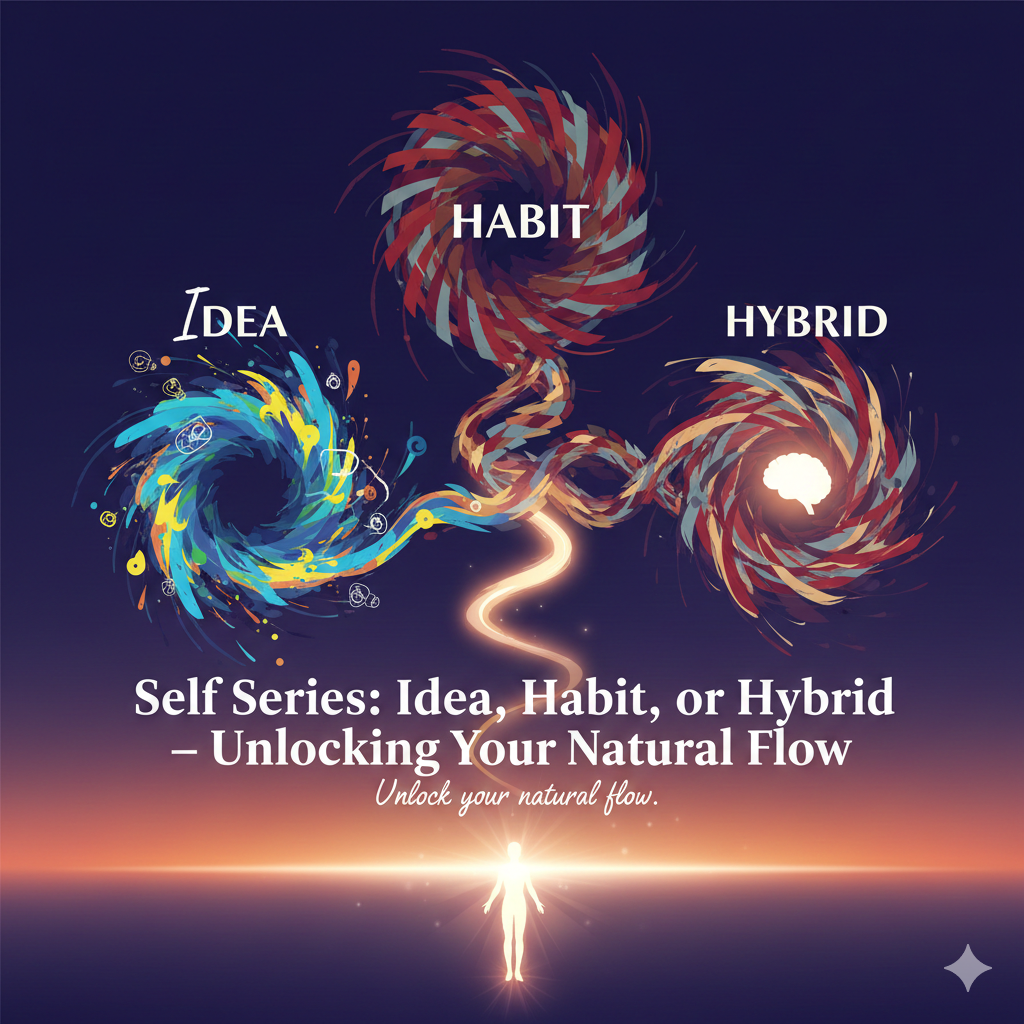
The Self Series: Idea, Habit, or Hybrid — Unlocking Your Natural Flow

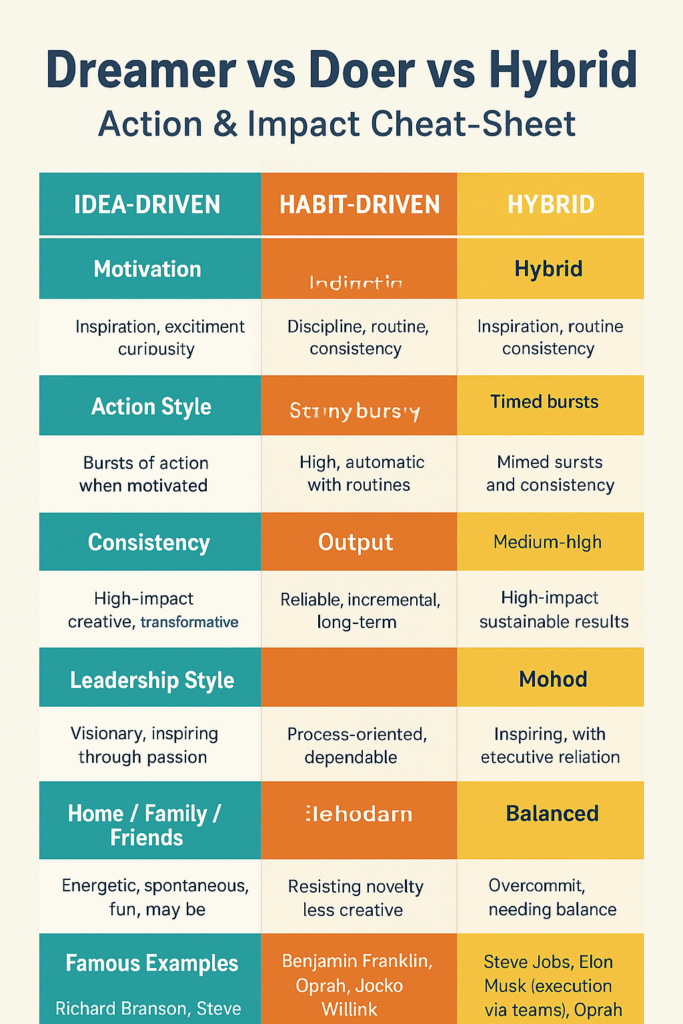
Lately, I’ve been reflecting a lot on my own work style, habits, and how I interact with people. I realized something interesting: I’m Idea-driven in core, yet I instinctively expect structure and routine from others makes me Hybrid in execution and collaboration.

This got me thinking — surely, other people operate differently. Some thrive on consistency, while others, like me, thrive on inspiration. And then there are those who seem to blend both worlds.

So I decided to explore this further and write about Idea-Driven, Habit-Driven, and Hybrid personalities, and how these traits show up in leadership, family, friendships, and personal growth. My hope is that by sharing this, readers can reflect on their own style, understand how it affects their life, and learn where to leverage their strengths or be cautious.

1. Idea-Driven Personalities

Traits & Approach

  • Motivated by ideas, inspiration, and creativity
  • Thrive in bursts of energy and excitement
  • Flexible, open to surprises, resistant to rigid routines

Expectations

  • From self: Freedom to act on inspiration, explore, and create
  • From others: Structure, clarity, and routine from colleagues or team members

Perception by Others

  • At work: Visionary, creative, sometimes unpredictable
  • At home/friends: Energetic, inspiring, spontaneous; may sometimes seem inconsistent

Leadership Style

  • Big-picture visionaries
  • Inspire teams through passion and innovation
  • May struggle with routine management or follow-through

Parenting & Family

  • Encourages creativity and exploration
  • Values experiences over schedules
  • Can struggle with enforcing routines

Famous Idea-Driven Achievers

  • Richard Branson – leveraged bursts of inspiration for businesses, relied on structured teams for execution
  • Steve Jobs – visionary innovation, used others’ discipline to deliver results
  • Elon Musk – pursues high-impact projects, teams ensure operational follow-through

2. Habit-Driven Personalities

Traits & Approach

  • Motivated by discipline, routine, and consistency
  • Thrive on schedules and incremental progress
  • Prefer predictability and steady outcomes

Expectations

  • From self: Follow routines consistently, track progress
  • From others: Respect schedules, minimal disruption

Perception by Others

  • At work: Dependable, reliable, sometimes seen as rigid
  • At home/friends: Predictable and supportive; may seem less spontaneous

Leadership Style

  • Structured, organized, process-oriented
  • Excellent at maintaining stable, reliable teams
  • May resist rapid change or improvisation

Parenting & Family

  • Creates predictable routines and schedules
  • Focused on responsibility and consistency
  • May struggle to allow spontaneous fun

Famous Habit-Driven Achievers

  • Benjamin Franklin – mastery through strict daily routines
  • Oprah Winfrey – disciplined routines for reflection and growth
  • Jocko Willink – military precision, leadership through consistency

3. Hybrid Personalities (Idea + Habit-Driven)

Traits & Approach

  • Blend bursts of creativity with supporting structure
  • Flexible personally, but can design systems to execute ideas
  • Thrive on both inspiration and reliable processes

Expectations

  • From self: Space for creativity, but frameworks for follow-through
  • From others: Collaboration that balances innovation and execution

Perception by Others

  • At work: Visionary yet reliable; can bridge creative and operational teams
  • At home/friends: Energetic but dependable; inspires while maintaining stability

Leadership Style

  • Combines visionary thinking with execution discipline
  • Motivates through inspiration while ensuring consistent results
  • Excellent for roles requiring innovation plus operational success

Parenting & Family

  • Encourages creativity while maintaining routines
  • Balances exploration with responsibility
  • Inspires confidence and stability simultaneously

Famous Hybrid Achievers

  • Steve Jobs – bursts of vision combined with structured execution teams
  • Elon Musk – idea-driven vision with teams to operationalize projects
  • Oprah Winfrey – disciplined daily habits while creatively innovating content

4. How Personality Affects You and Others

  • Where it matters: Career, leadership, teamwork, personal growth
  • Where it doesn’t matter: Self-worth, external validation, passion and curiosity
  • How to leverage your type:
    • Idea-driven: Harness inspiration; partner with structure for follow-through
    • Habit-driven: Maintain consistency; allow small bursts of creativity
    • Hybrid: Use vision and structure together to maximize impact

Reflection Questions:

  • Which type are you — Idea, Habit, or Hybrid?
  • How does your personality show at work, with friends, and at home?
  • Where can you leverage your strengths and where should you be cautious?

💡 Key Takeaway:
No personality type is “better” — success comes from understanding your natural tendencies, leveraging your strengths, and managing blind spots. Idea-driven, habit-driven, or hybrid — each can excel when applied thoughtfully.

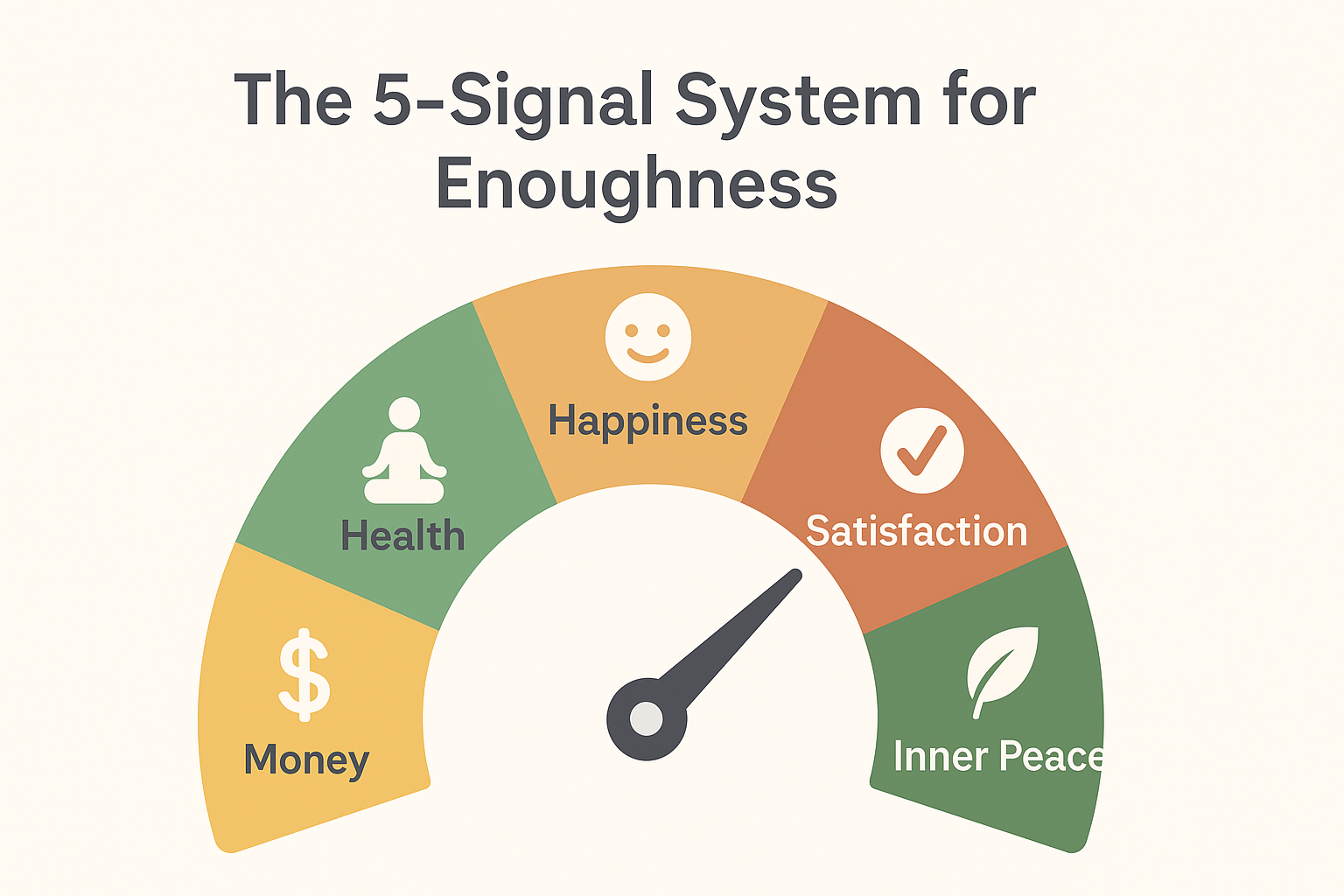
The 5-Signal System for Enoughness

We often chase more — more success, more money, more comfort — without checking if we’re already living with enoughness. This model introduces five core life signals that help you reflect on whether your life feels safe, meaningful, joyful, and aligned.

Most importantly, it clarifies why Satisfaction is separate from Money, Health, and Happiness, and how ambition can co-exist with a grounded sense of enoughness.

But very rarely do we pause and ask ourselves:

“Do I already have enough?”

The 5-Signal System for Enoughness is a gentle, practical tool to help you reflect on the areas of life that truly matter.
Not as an external checklist, but as an inner dashboard.

🌟 1. Money — The Security Signal

Money reflects stability, not status. It’s about feeling protected, having choices, and living without constant fear.

What Money “Enoughness” Means

  • Your essentials are covered without strain
  • You can handle an unexpected expense
  • You spend consciously—not emotionally

Key Question

“Do I feel financially safe and free, not necessarily rich?”


🧘‍♀️ 2. Health — The Energy Signal

Health determines the quality of your days. When your body supports you, life feels lighter.

What Health “Enoughness” Means

  • You wake up with stable energy
  • You can perform daily activities without discomfort
  • Your body feels like a partner, not a limitation

Key Question

“Is my body supporting the life I want to live?”


😊 3. Happiness — The Emotional Signal

Happiness is your emotional tone. It’s not about being happy always — but feeling joy naturally.

What Happiness “Enoughness” Means

  • You have small, frequent moments of joy
  • You can bounce back from emotional dips
  • Your mind doesn’t feel heavy every day

Key Question

“Do I experience moments of joy or ease in a normal week?”


⭐ 4. Satisfaction — The Alignment Signal

Satisfaction is not the same as happiness or money or health. It is the long-term sense of fulfillment.

It measures whether your life reflects your values, identity, and purpose — not anyone else’s.

Why Satisfaction is Separate

  • You can be happy today but unsatisfied with your life
  • You can be wealthy but feel empty
  • You can be healthy but feel you’re not living your potential

Satisfaction equals alignment — the feeling that you’re on your true path.

What Satisfaction “Enoughness” Means

  • Your efforts feel meaningful
  • Your choices reflect your values
  • You feel you’re progressing in the right direction

Key Question

“Is the way I’m living aligned with what truly matters to me?”


🍃 5. Inner Peace — The Steadiness Signal

Inner Peace is emotional grounding. It’s the feeling that your mind is not constantly fighting you.

What Inner Peace “Enoughness” Means

  • Your thoughts don’t overwhelm you
  • You recover emotionally without staying stuck
  • You can handle uncertainty without spiraling

Key Question

“Is my inner world calm enough for me to think clearly and live gently?”


⚖️ Balancing Enoughness and Ambition

Here is the truth many people misunderstand:

Ambition is not the opposite of enoughness — stagnation is.

You can feel enough and still desire growth.
You can be grateful and still aspire.

Unhealthy Ambition

  • “I’ll be enough when I achieve more.”
  • “I must constantly prove myself.”
  • “My worth depends on performance.”

Healthy, Grounded Ambition

  • “I am already enough — and I choose to grow.”
  • “My progress is meaningful, not pressured.”
  • “Ambition adds to my life, not replaces peace.”

Ambition belongs within the Satisfaction signal.
True satisfaction often includes purposeful growth.


✨ The 5-Signal Self-Check

Rate each signal from 1 to 5:

  • 1 — Very low
  • 2 — Needs improvement
  • 3 — Acceptable
  • 4 — Strong
  • 5 — Excellent
Life Signal12345
💰 Money
🧘‍♀️ Health
😊 Happiness
🎯 Satisfaction
🌿 Inner Peace

Interpretation:

  • 15 or above → You are living with strong enoughness
  • 10–14 → You have a stable foundation with room to deepen
  • Below 10 → You may be craving balance, alignment, or stability

🌱 Final Reflection

Enoughness grounds you. Ambition moves you.
A good life contains both.

When your five signals are mostly green — safety, energy, joy, alignment, and peace — you live from a place of stability. From there, ambition stops being pressure and becomes expansion.

You don’t stop growing.
You just stop growing from fear.

© 2026 readswithb.com

Theme by Anders NorénUp ↑